Key Takeaways
- In 2024, the median age for a first marriage in the U.S. was 30.2 for men and 28.6 for women, continuing a decades-long trend of later marriages.
- Many couples delay marriage to focus on financial stability, emotional maturity, or navigating modern dating challenges like dating apps and ghosting.
- Shifting cultural views, including the rise of domestic partnerships and concerns about divorce, lead some couples to rethink marriage altogether.
There’s no one-size-fits-all rule for the right age to get married. Ultimately, each person or couple needs to consider everything from their finances to their views on the tradition before saying “I do.” However, over the last five years, both men and women have waited longer than ever before to get married. In 2020, the median age for men peaked at 30.5—and hit a high of 28.6 for women.
According to the United States Census Bureau, in 2024, the median age for a first marriage was 30.2 for men and 28.6 for women—a slight increase from 28.4 for women (and no change for men) from the previous year. Since 1950, these numbers have consistently trended upward; 75 years ago, men were married at 22.8 and women at 20.3. For decades, cultural shifts have driven these changes, as societal views around the institution of marriage has evolved. Many couples wait until they are financially secure, take their time dating, and consider their emotional maturity before getting engaged, says Christie Kim, a New York- and Texas-based psychotherapist.
If you and your partner are discussing the possibility of marriage, Kim recommends considering some basic questions—no matter how old you are—both individually and together. “As a mental health counselor who works with both married and unmarried couples, as well as individuals, I would advise readers to reflect upon what drives their curiosity or interest in marriage,” she says. “Am I feeling driven to marriage because of the excitement of having a wedding? To please my parents so they would approve of my live-in partner? To create a foundation for raising children? What about my partner and partnership leads me to consider marrying them, or cautions me from marrying them? Am I listening to my gut/intuition or a list of rationalized factors? Many of the driving forces may be subconscious so it may take some time, honesty, and various spaces to help explore these questions.”
Why Are U.S. Couples Waiting Longer to Marry?
While there’s no disputing this clear trend, there are a variety of factors that influence a couple to hold off on saying “I do.” Here, Kim explains a few of them.
Their Views on Marriage Have Shifted
While marriage may have been the norm for past generations, it’s no longer the default goal, says Kim. “In my work with couples, I've observed many come to view marriage as one of multiple paths, rather than an inevitable progression of a long-term relationship,” she says. Overall views of marriage have evolved. For example, for many pairs, a wedding no longer feels like a prerequisite for starting a family. Domestic partnerships also provide similar legal protections without the fuss of a ceremony and reception. And for some, the frequency of divorce is enough to make them reconsider the entire institution.
“Many couples and individuals discuss their observations of the marriages around them, whether it be among parents and extended family, or peers, and feel cautious about the balance between the benefits and risks of marriage, particularly when some of their peers may start to experience divorce in their 30s as well,” says Kim. “In other cases, some partners didn't consider getting married for most of their lives but opt into marriage primarily because it's important to their current partner. In this view, marriage is more of an expression of commitment to a particular person rather than viewed as a stage or role of life.”
They’re Not Financially Prepared
Other would-be weddings are put off by couples who are still sorting out their finances and don’t feel prepared to pay for a wedding or to merge their money. “Couples want to feel financially stable before entering a marriage, but feel they are not yet ready in their 20s and 30s,” says Kim. “There are many socioeconomic factors involved, including credit card debt, student loans, lack of savings, high costs of home ownership, which make these decisions more difficult, especially among adults who already feel financially overwhelmed or disorganized.”
They Don’t Feel Emotionally Ready
While it can be tempting to jump into the festivities and celebration of an engagement and a wedding, many couples in the 20- to 30-year-old age bracket don’t feel mature enough for the milestone of marriage, says Kim. “Some feel intimidated by the steps that seem to automatically follow a wedding, such as children and home ownership, along with being responsible to a spouse both in practical care and financial wellbeing,” she says. This can be especially true for people who are working to improve their own mental health or process difficult previous experiences. “Individuals may be struggling with the stability of their mental health, which in turn affects their view on pursuing parenthood and other additional responsibilities,” says Kim. “Many choose to engage in individual or couples therapy as a way to explore whether marriage feels right for them.”
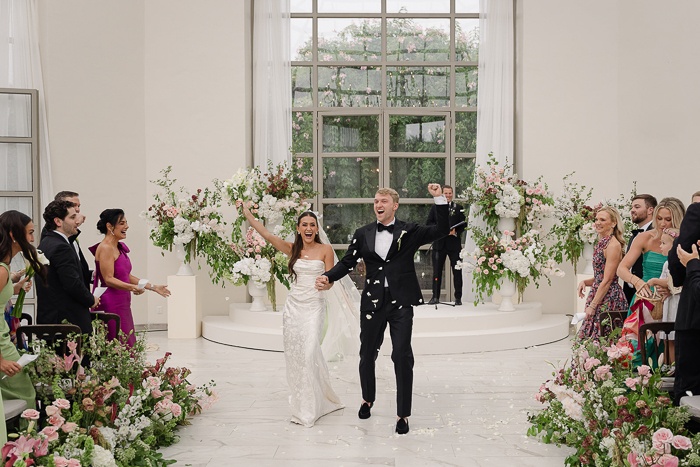
Photo by Radian Photography
3 Factors Contributing to the Rising Average Age of Marriage in the U.S.
Single individuals are also taking longer to find their lifelong partner. Whether they're choosing to take a step back from the dating scene altogether or feel overwhelmed by the number of potential matches, these can both be contributing factors on why they wait longer before settling down.
Infinite Dating Possibilities
The world of modern dating gives single people seemingly endless chances to meet “the one.” As a result, they may be less likely to tie the knot early with someone they’ve known since childhood—and instead spend more time searching for their lifelong partner, says Kim. “Many adults experience the dating scene, especially with the ubiquity of dating apps, as a ‘numbers game,’ aiming to meet (virtually or in-person) as many people as possible in order to fulfill a sense of FOMO or feel assured that they find the ‘best’ person for them,” she says. “Ghosting, being compared to other dates or potential partners, and wavering expectations of exclusivity and/or ethical non-monogamy can all contribute to a sense of disheartenment in those who are seeking a serious long-term partner within the dating scene and lead many to take longer and more frequent breaks from dating.”
High Divorce Rates
Kim also sees couples delay—or skip—marriage as a reaction to the high frequency of divorce. “The high divorce rates continue to offer a cautionary tale to those who are considering whether to marry,” she says.
Alternative Partnership Possibilities
For some couples, a resistance to marriage comes from embracing a different view of how partnerships can work. “It appears that increasingly popular ideas around ethical non-monogamy and polyamory are offering alternative views on marriage as a long-term monogamous lifestyle, which may give individuals more pause to consider what about marriage is truly appealing or right for them,” says Kim. “Adults are still committing to long-term and often monogamous partnerships, but may view marriage more as a legal contract rather than a romantic notion. In this case, domestic partnerships and civil ceremonies become more appealing options.”