Wedding rituals have a wonderful way of bringing people together – they create moments of genuine and memorable connection between a couple, their families and friends and give everyone present a chance to share in something that goes beyond the exchange of vows.
As a professional wedding celebrant, one of the things I most enjoy is finding ways to make a ceremony feel engaging and personal for everyone involved. Words are incredibly important, but we all respond to things differently and sometimes a gesture, a shared action or a moment of symbolism can communicate feelings that are difficult to express through words alone.
This is where rituals can add so much to a wedding ceremony, giving couples the opportunity to express their love and commitment in ways that feel natural to them, while inviting their guests to become part of the experience.
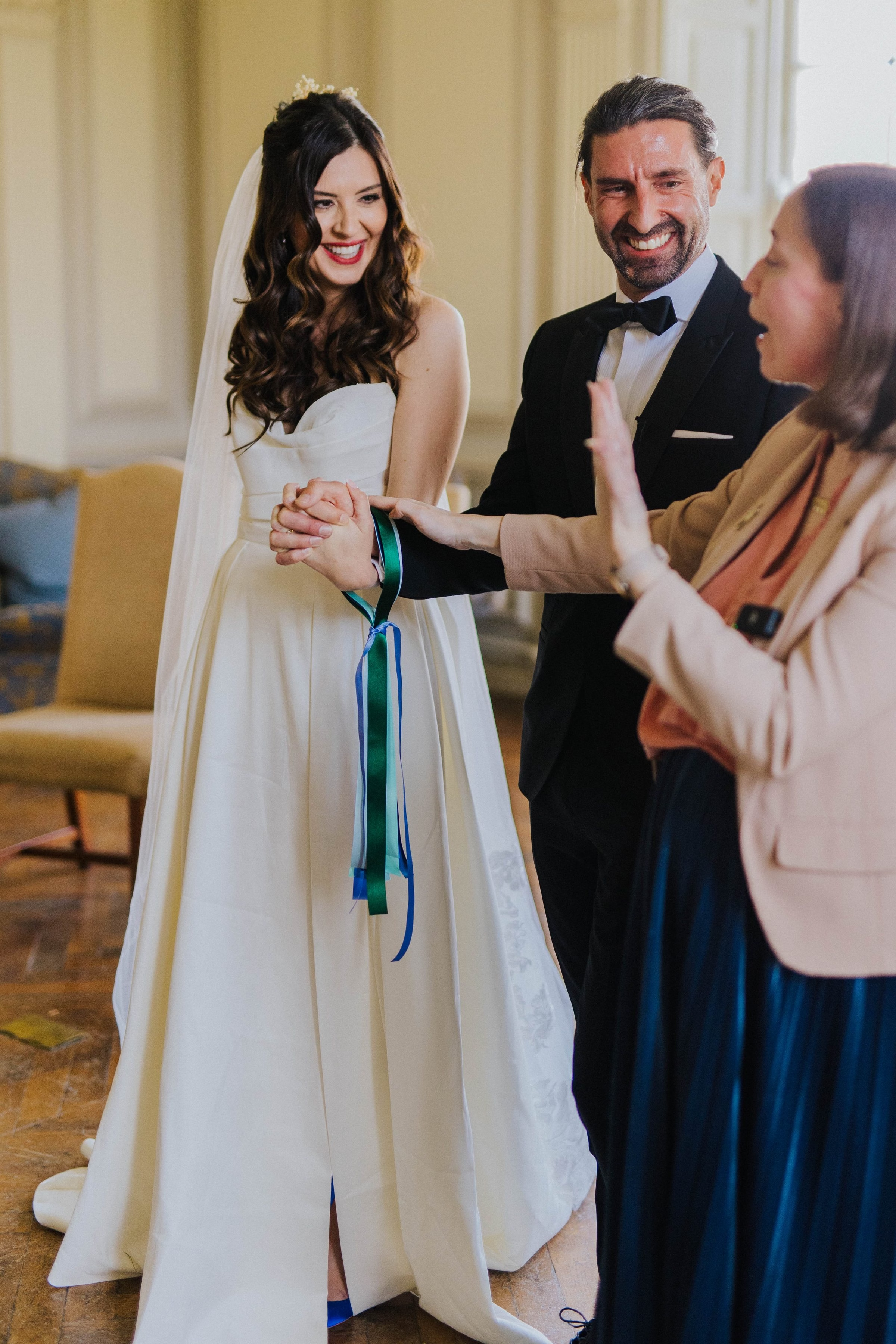
Handfasting – photography by Lily North
Why modern couples are choosing wedding rituals
Couples today are increasingly interested in wedding ceremonies that reflect their personalities and the relationships they’ve built, rather than simply following a familiar format because it’s what weddings have always looked like.
Of course, the exchange of vows remains at the heart of any wedding ceremony, but not everyone finds it easy to put their deepest feelings into words, particularly when they’re standing in front of a room full of people they love. A symbolic ritual can be a lovely way of expressing those emotions, giving couples something to share and participate in without feeling that every sentiment needs to be spoken aloud.
There’s also something rather special about involving family and friends, particularly when the ritual recognises their place in the couple’s lives and the love and support they’ve offered over the years. Rather than simply watching the ceremony, guests are invited to contribute to it, which can make the occasion feel more inclusive and give everyone a greater sense of connection.
And while rituals can bring considerable emotion to a wedding, they can also introduce humour, spontaneity and moments of genuine joy. I’ve witnessed ceremonies where a simple shared action has moved an entire room to tears and others where an unexpected moment of laughter has helped everyone relax, and those are often the memories that stay with couples and their guests long after the wedding day.
Secular Wedding Rituals with Emotional Impact
One of the great pleasures of creating a Humanist wedding ceremony is the freedom to explore different traditions and rituals, adapting them to suit each couple or even inventing something entirely new.
There’s no requirement to include a ritual at all, but for couples who would like to introduce something symbolic into their ceremony, there are some beautiful possibilities to consider.
Community Rituals
Ring Warming Ceremony
A ring warming is one of my favourite ways to involve guests in a wedding ceremony, and I often suggest it to couples who want their family and friends to feel particularly included in the occasion.
The rings are passed among the guests, with each person invited to hold them for a moment and silently offer their love and good wishes to the couple. By the time they reach the front of the ceremony, the rings have quite literally been warmed by the hands of the people who matter most, carrying with them all those lovely thoughts and hopes for the marriage ahead.
It’s such a simple idea, yet the symbolism is beautiful, and I particularly love the thought of a couple wearing their wedding rings for years to come knowing that, before they exchanged them, those rings had been held by the people they love.
Group Wedding Vows
Group vows are another wonderful way of bringing guests into the ceremony, giving everyone an opportunity to make a promise of their own to the couple.
Before the ceremony begins, I usually explain what’s going to happen and give everyone a chance to practise their response, which is often rather entertaining in itself!
During the ceremony, I might ask something along the lines of, ‘Do you promise to support Martha and Ollie in their marriage, surrounding them in love and friendship?’ to which everyone responds with a wonderfully enthusiastic ‘We do!’
It’s a lovely reminder that marriage isn’t simply about two people making promises to each other, but also about the community of family and friends who will continue to love and support them throughout their lives together.
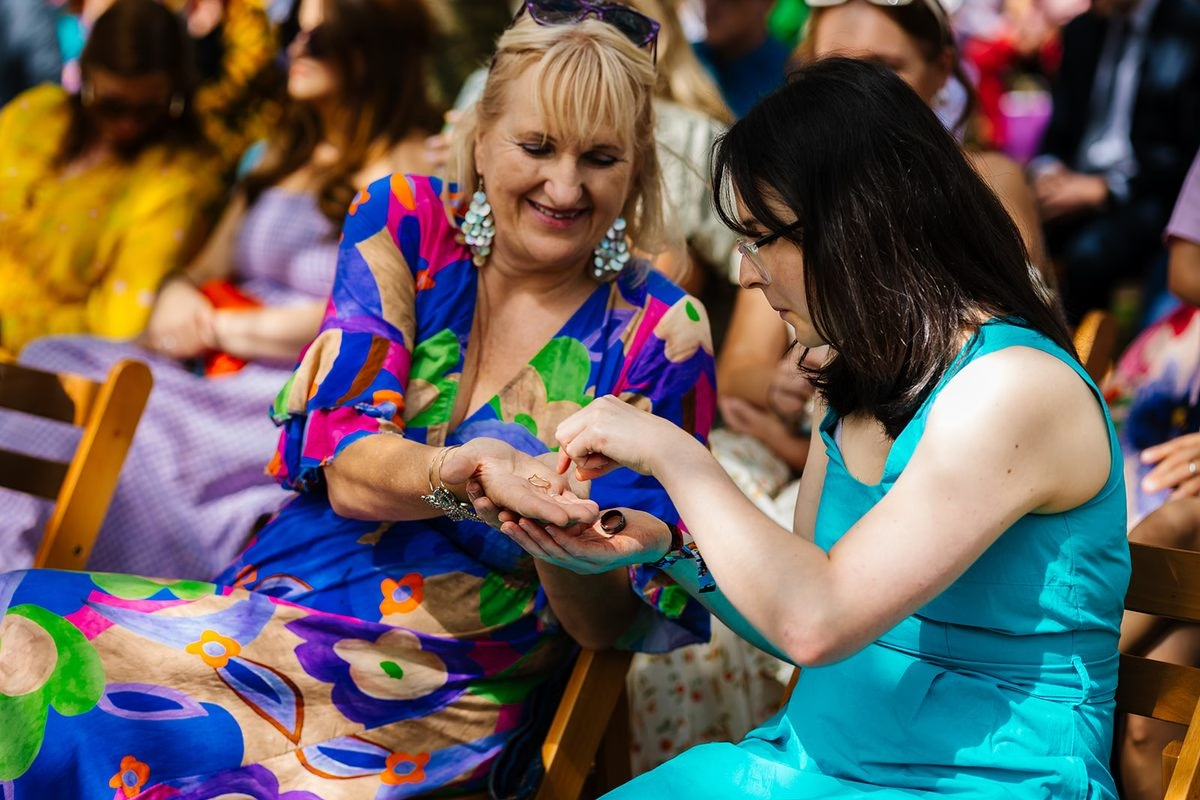
ring warming during a wedding ceremony, Rachel Burt Photography
Unity Rituals
Handfasting Ceremony
Handfasting draws on a longstanding tradition associated with Celtic culture and has become a popular choice for modern couples who would like to represent the joining of their lives through a physical, symbolic act.
The couple stands facing one another and holds hands while cords, ribbons or pieces of fabric are draped around their joined hands, either by the celebrant or by chosen family members and friends, before being tied into a knot.
There are so many ways to personalise a handfasting, from choosing ribbons in particular colours to incorporating pieces of fabric that hold sentimental value, and the words spoken during the ritual can be written specifically to reflect the couple’s relationship and the promises they’re making.
I love the visual simplicity of two people joining hands and having them bound together in this way, particularly when family members are involved in placing the cords, as it provides such a lovely representation of the bond being celebrated and the people connected through it.
It’s also one of those rituals that photographers tend to adore, as there is so much emotion and movement to capture.
Unity Candle Ceremony
The lighting of a unity candle introduces a lovely moment of reflection into a wedding ceremony, with each partner taking a smaller candle and using their flames to light a larger candle together, representing the joining of their lives.
As the couple lights the candle, I share words about their relationship, the promises they’re making and the future they’re looking forward to, allowing everyone a moment to reflect on the significance of what is taking place.
This can be particularly poignant for couples who already have children or are bringing together a blended family, as the children can be involved in lighting the candle too, acknowledging that the marriage is bringing together a family as well as two individuals.
It’s also possible to incorporate a moment of remembrance for loved ones who are no longer with us, allowing their memory to be honoured in a way that feels gentle and appropriate to the occasion.
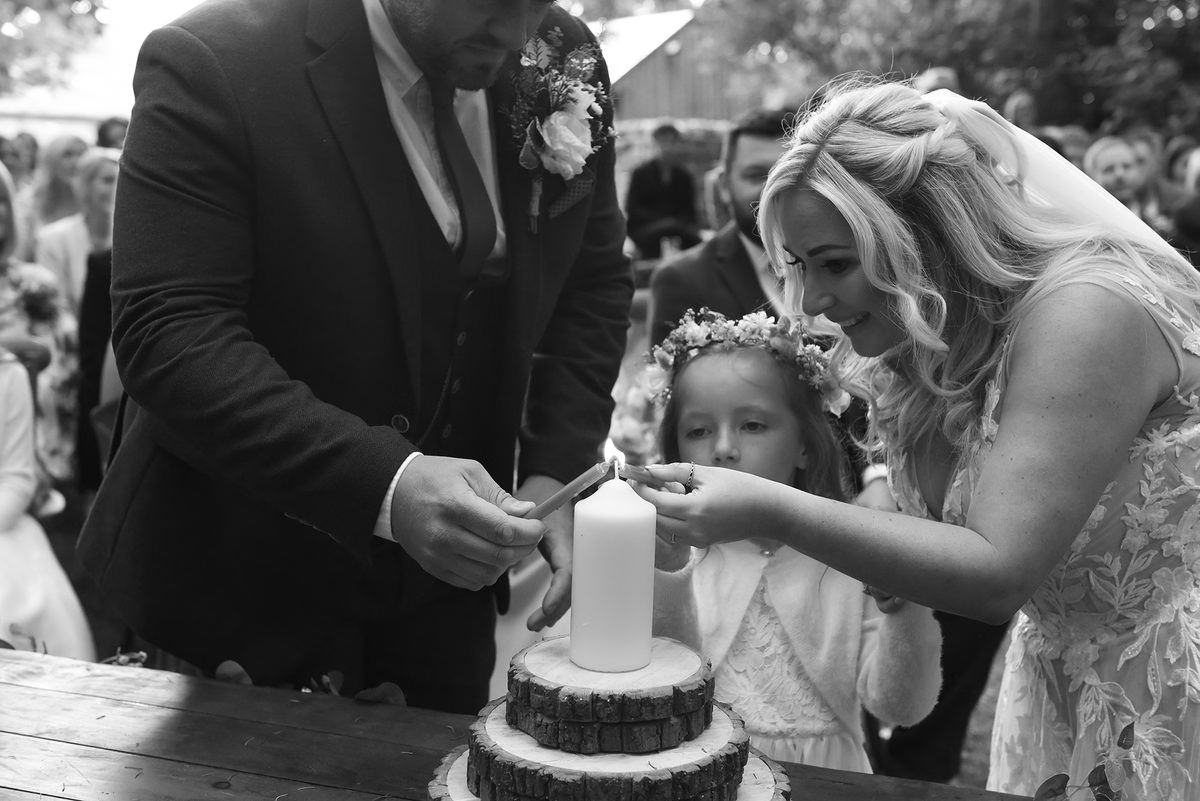
Leanne + Rich’s Lineham Farm unity candle, photographed by Megan Yearsby
Rituals of Intention
Personal Wedding Vows
Writing personal wedding vows is something I encourage all my couples to consider, because there is something incredibly moving about hearing two people explain, in their own words, why they’ve chosen each other and what they hope to share in the years ahead.
For me, this is often the emotional high point of the entire ceremony, although I completely understand why some couples find the prospect a little daunting!
Not everyone feels comfortable putting their most personal thoughts into words, especially knowing they’ll be reading them aloud in front of family and friends, which is why I spend time helping couples develop vows that feel natural, confident and true to their personalities.
There’s no need for beautifully elaborate declarations or clever quotations, and sometimes the simplest words, spoken with genuine feeling, are the ones that move people the most.
Most couples choose to keep their vows a surprise until the wedding day, which makes the moment they hear those promises for the first time all the more emotional.
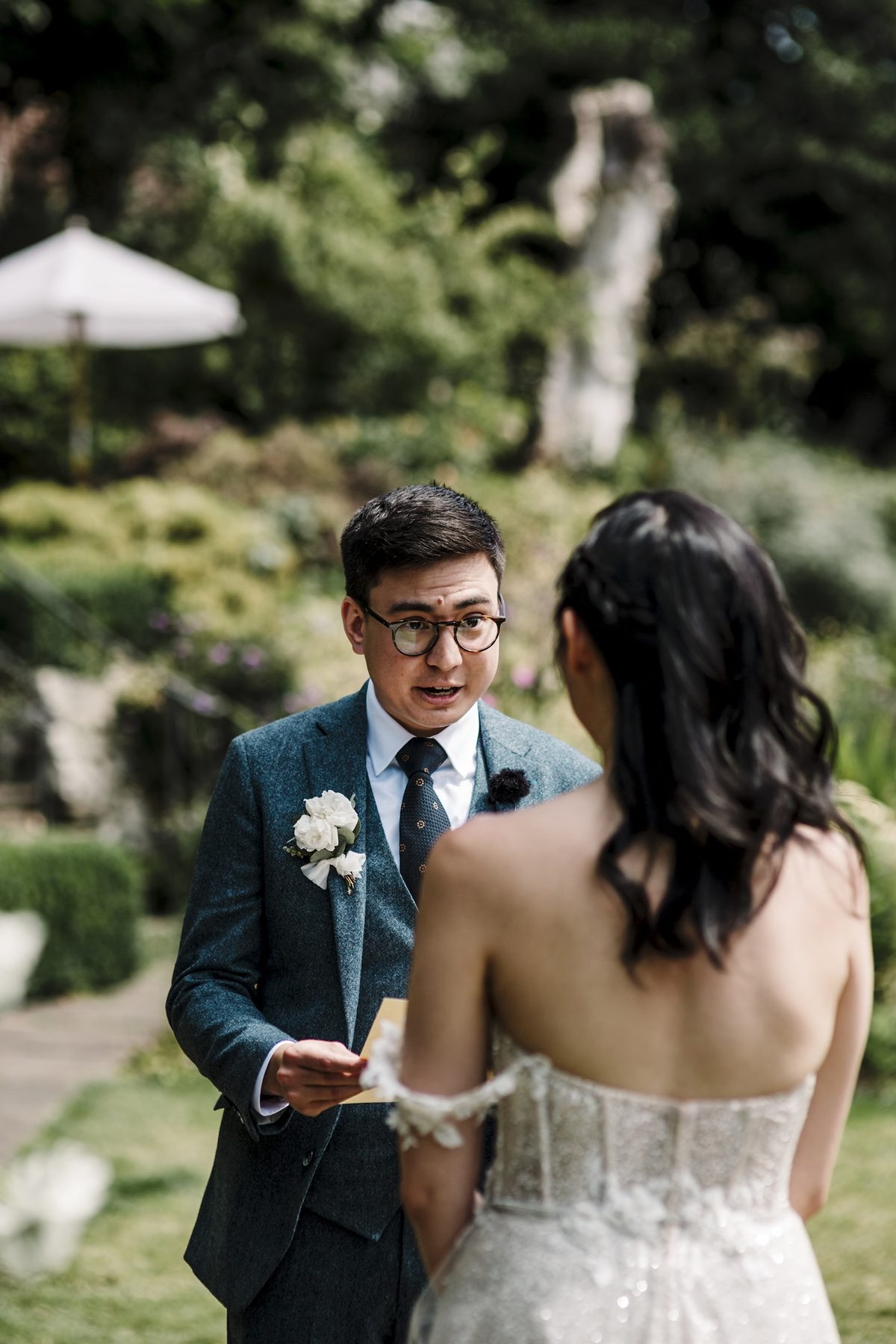 https://www.amyfaithphotography.com
Photos: Tasha and Raef exchanging wedding vows at Gray’s Court, captured by Amy Faith Photography
Wine Box Ceremony
For couples who would prefer to keep their most intimate thoughts private, a wine box ceremony offers a lovely alternative to sharing personal vows aloud.
Before the wedding, each partner writes a letter to the other, telling them what they love about them, how they’re feeling about getting married and what they’re hoping for in the years to come.
During the ceremony, the letters are placed inside a box alongside a bottle of good red wine, which is then sealed with the intention of opening it on their fifth wedding anniversary.
I think there’s something wonderfully romantic about the idea of sitting down together five years later, perhaps with a glass of that wine, and discovering what you wrote to one another in the days before your marriage began.
It’s also a ritual that can introduce a little fun into the ceremony, particularly if one of the couple enjoys DIY and wants to bring along their own hammer to help seal the box!
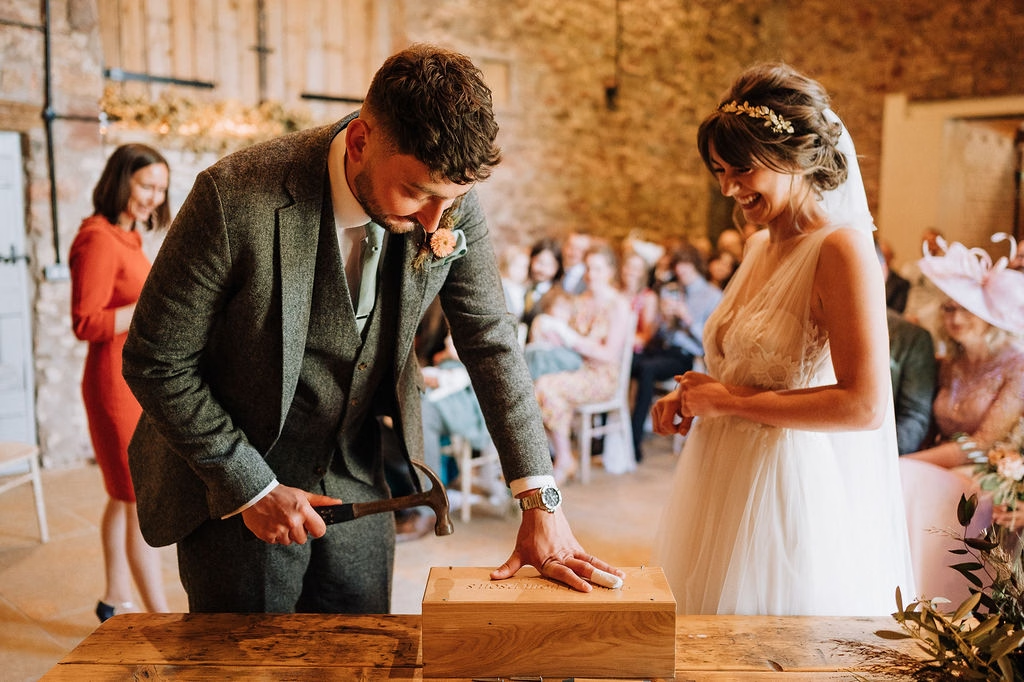
Abi and Jack’s wine box ceremony, Eden Barn, captured by James Hicks Photography
Wedding Rituals Inspired by Cultural Traditions
Humanist wedding ceremonies offer couples the freedom to celebrate every part of their identity, including the cultural traditions and family customs that have been important throughout their lives.
I love working with couples who want to acknowledge their heritage through their ceremony, particularly when it provides an opportunity to bring together different cultures and introduce family members and guests to traditions they might not have experienced before.
Greek Stefana Crown Ceremony
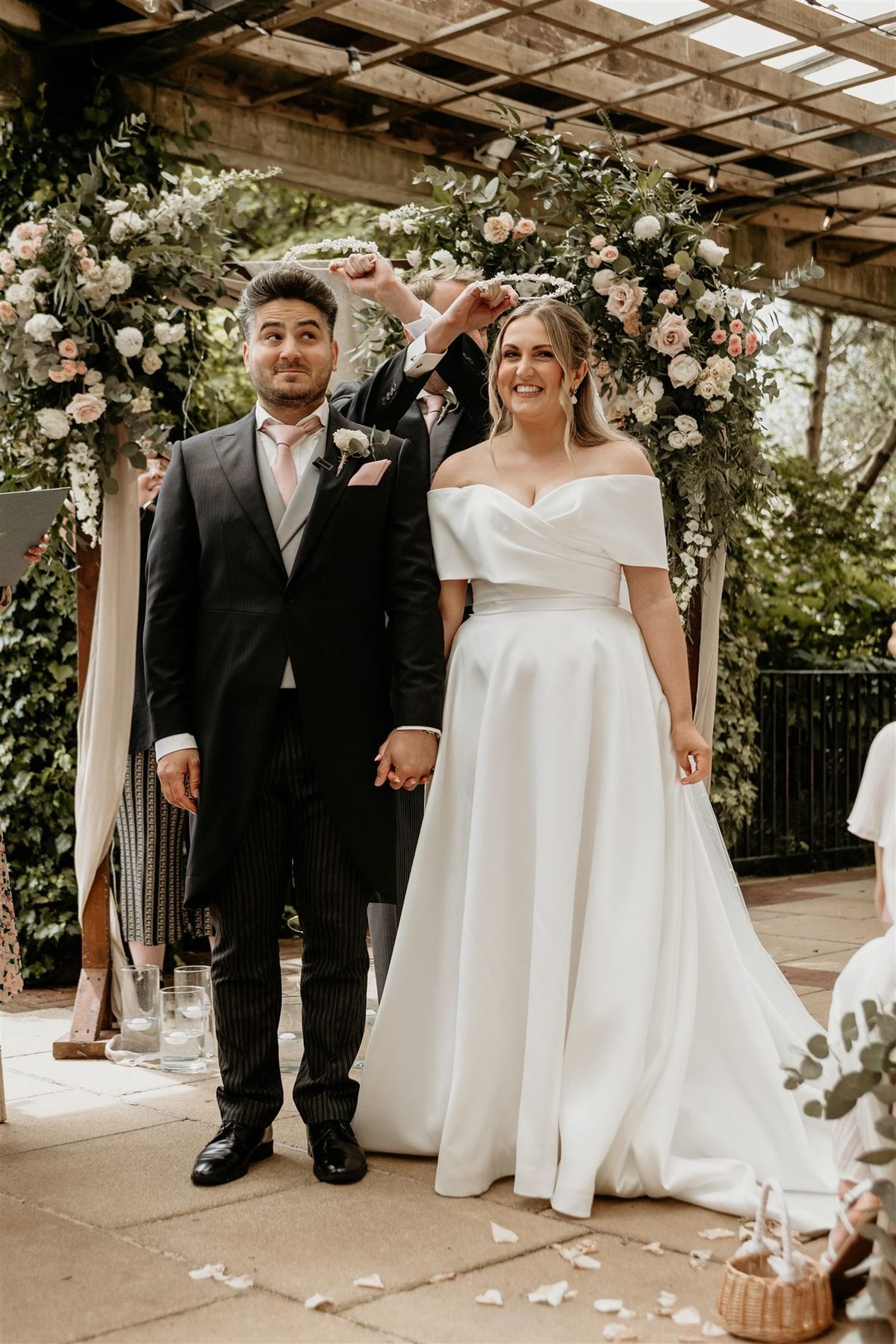
At Jen and Phil’s wedding at Harrogate Sun Pavilion, we incorporated a traditional Greek stefana ceremony to honour Phil’s family heritage.
During the ritual, their best man placed crowns upon their heads, symbolising the couple becoming the king and queen of their home, while I shared three traditional blessings.
It was a beautiful way of bringing an element of Phil’s Greek background into their Humanist ceremony, allowing a tradition with particular significance to his family to become part of their wedding celebration.
 yorkshire wedding photographer
Photos: Jen and Phil’s stefana ceremony, Harrogate Sun Pavilion, captured by Claire McClean
Chinese Tea Ceremony
The Chinese tea ceremony is a tradition in which a couple serves tea to their parents, relatives and honoured guests as a gesture of respect and gratitude, thanking them for their love and support while receiving their blessings for the marriage ahead.
Traditionally, this takes place after the wedding ceremony, but there’s plenty of scope to adapt the experience to suit the couple and their celebrations.
Tasha and Raef chose to bring together Tasha’s Chinese heritage and the English tradition of afternoon tea, creating a lovely combination of two cultures that was personal to their relationship and families.
It’s these thoughtful adaptations that I particularly enjoy, as they allow couples to honour the traditions that matter to them while celebrating their shared lives and identities.
Tasha + Raef’s Chinese tea ceremony, Gray’s Court, by Amy Faith
Creative and Personal Wedding Rituals
One of my favourite things to remind couples is that all traditions were new once, so there’s absolutely no reason why you can’t create something that feels unique to your own relationship.
Perhaps there’s a shared hobby, a favourite activity or something slightly unusual that has become part of your life together, which could be incorporated into the ceremony in a way that feels both personal and fun.
Some couples choose to make a cocktail together, blend their own tea or spices or even undertake a physical challenge such as sawing through a log, which might sound rather unexpected in the middle of a wedding ceremony but can be a brilliant way of celebrating the things they enjoy doing together.
With a little imagination and the right words to explain its significance, even the most ordinary activity can become a lovely expression of the partnership being celebrated.
And while these rituals might not have centuries of tradition behind them, they can still mean just as much to the people taking part.
The Role of the Celebrant in Creating Authentic Wedding Rituals
Of course, the success of any wedding ritual depends on whether the couple feels comfortable taking part, and this is where working closely with an experienced celebrant can make such a difference.
We’ve probably all attended a wedding where something has felt a little awkward, perhaps because the couple has been asked to repeat words that don’t sound natural to them, or participate in a tradition that doesn’t really reflect their beliefs.
It’s difficult to relax and enjoy a ceremony when you’re worrying about what you’re supposed to be doing, or whether the words you’re saying genuinely reflect how you feel.
This is why I spend so much time getting to know my couples before their wedding, learning about their relationship, understanding what matters to them and discovering whether they’d prefer a ceremony that’s emotional, light-hearted, traditional or a lovely mixture of everything.
Some couples adore the idea of involving all their guests, while others would rather share an intimate moment between themselves, and there really is no right or wrong approach.
My role is to help them explore the possibilities, choose rituals that feel comfortable and appropriate and make sure that everyone understands what’s happening and why, so the couple can relax, enjoy the occasion and be fully present in the moment.
And while wedding ceremonies are wonderfully significant occasions, I firmly believe there should always be room for humour, spontaneity and fun!
The Lasting Meaning of Wedding Rituals
There’s no doubt that wedding rituals often make for some wonderful photographs, but their value goes far beyond the images captured on the day. When a couple takes part in a ritual, they’re doing something together that has been chosen specifically for its significance to their relationship, and those shared actions can become some of the memories they treasure most.
I also love that certain rituals can continue to be part of a couple’s life long after the wedding itself, creating opportunities to revisit the promises they made and remember how they felt on that particular day. Perhaps they’ll open their wine box on their fifth anniversary, read their wedding vows to each other again, watch a tree they planted together grow over the years or relight their unity candle each anniversary.
Some couples might even pass a treasured wedding accessory on to their children one day, sharing the story behind it and the memories associated with their own wedding.
These are such lovely ways to maintain a connection with the wedding day, not because couples need reminding of their promises, but because it’s a pleasure to revisit those feelings and celebrate everything they’ve shared since.
While modern weddings may be less religious than those of previous generations, couples are still finding enormous value in tradition, symbolism and ceremony, particularly when they have the freedom to choose what those things mean to them.
As a Humanist wedding celebrant, it’s a genuine privilege to help couples discover rituals that feel right for their relationship, bringing their personalities, family traditions and individual stories into a ceremony that they’ll remember with affection for years to come.
And very often, it’s the simplest of gestures that ends up meaning the most.