Shopping for a lab-grown diamond ring can get confusing fast. There are shapes, carat weights, clarity grades, color grades, settings, certifications… and suddenly you’re wondering if you need a gemology degree before you can pick a ring.
In this article, a gemologist will break down what really matters when you’re comparing lab-grown diamond rings, from how lab-grown diamonds are made to which details are worth paying attention to when you’re choosing your stone.
How Lab-Grown Diamonds Are Created
Lab-grown diamonds are real diamonds created through controlled technological processes rather than formed naturally beneath the earth. From a gemologist’s perspective, understanding how they are created is only the starting point. But for you as the buyer, the more important part comes next: knowing what to look for when you’re choosing the actual diamond.
Here’s what a gemologist would recommend looking at before making a decision.
HPHT vs CVD
Lab diamonds are produced using advanced technology that recreates the conditions required for diamond growth. Two primary methods are used: High Pressure High Temperature (HPHT) and Chemical Vapor Deposition (CVD).
HPHT technology uses high pressure and high temperature to grow a diamond from a carbon source. CVD uses a carbon-containing gas in a controlled chamber, where carbon atoms gradually form diamond layers.
Both processes produce diamonds with the same crystal structure and the physical and optical properties associated with diamond. Once created and polished, they can be evaluated using the same core grading characteristics used to assess other diamonds.
Understanding the creation process can help buyers recognize that the more important shopping decision comes after the diamond has been grown: evaluating its individual characteristics.
Start With the 4Cs
The 4Cs are your starting point when you’re comparing diamonds: cut, color, clarity, and carat. Rather than treating one grade as the deciding factor, gemologists look at how these characteristics work together.
Important take: You don’t need the highest possible grade in every category. You’re looking for the combination that gives you the look you love at a price you’re comfortable with.
Cut: Look at How the Diamond Performs
A diamond’s cut has a significant influence on how it interacts with light, affecting its brightness, fire, and overall sparkle. A well-cut diamond reflects light efficiently, giving it a lively, brilliant appearance.
This is why the cut deserves particular attention when comparing lab-created diamond rings. Look beyond carat weight and consider how well the diamond is cut. A larger stone may not appear as brilliant as a smaller one if its proportions and faceting are less effective at reflecting light.
For round brilliant diamonds, an Excellent or Ideal cut grade is a useful starting point, where available, as it can help you identify stones with strong light performance.
Color: Understand the D-to-Z Scale
Diamond color is categorized from D to Z. D represents the highest colorless grade, while grades further down the scale show progressively warmer tones.
You don’t necessarily need to choose the highest grade to get a diamond that looks bright and white. G and H diamonds, for example, can offer a balance between a near-colorless appearance and value, depending on the stone’s cut, shape, and setting. The differences between neighboring grades can be subtle and are often difficult to distinguish without magnification.
The metal also influences how the diamond’s color is perceived. White gold and platinum provide a neutral backdrop, while yellow and rose gold can complement the warmer tones of lower color grades.
Clarity: Know What the Grades Actually Mean
Clarity refers to the internal characteristics, known as inclusions, and surface characteristics, known as blemishes, that are present in a diamond.
The clarity scale ranges from Flawless (FL) and Internally Flawless (IF) through VVS1 and VVS2, VS1 and VS2, SI1 and SI2, and I1, I2, and I3.
For many buyers, VS2 through SI1 can offer a practical balance. Diamonds in this range can often appear eye-clean, meaning their inclusions aren’t readily visible without magnification. Instead of automatically choosing the highest clarity grade, focus on how clean the specific diamond looks to the naked eye.
Here’s the part I’d pay attention to: a higher clarity grade doesn’t automatically mean you’ll see a prettier diamond. If a VS2 looks completely clean to your eye, you may not need to spend more just to move up the grading scale.
Carat: Consider Size and Proportions Together
Carat is used to measure the weight of a diamond. It is possible for two diamonds that have the same weight to differ in physical size.
This is particularly relevant when comparing rings because the center diamond’s face-up appearance should work in proportion to the band and setting.
One little shopping tip: don’t shop by carat number alone. Two diamonds with the same carat weight can look surprisingly different once they’re on your hand.
Certification Provides Important Information
A grading report gives buyers an independent record of a diamond’s characteristics. When shopping for lab-made diamond rings, look for a diamond that has been graded by a recognized gemological laboratory like the International Gemological Institute (IGI) or Gemological Institute of America (GIA).
A report typically records characteristics such as carat weight, color, clarity, cut where applicable, and diamond measurements. Some certified diamonds also carry a laser inscription on the girdle that corresponds with the report number.
Checking that information before purchasing allows you to compare diamonds based on documented characteristics rather than relying solely on photographs or product descriptions.
Which Diamond Shape Is Right for You?
Here’s where the fun part starts. Your diamond shape changes the entire personality of the ring, so this is one place where you can let your personal style take over.
The shape of the diamond has a significant influence on the appearance of the finished ring. It is also one of the easiest ways to make the design feel personal.
Some popular options include:
- Round: A classic shape with balanced proportions and strong light performance.
- Oval: An elongated shape that provides greater finger coverage.
- Emerald: A step-cut design with long, clean facets and a structured appearance.
- Pear: An elegant, teardrop-shaped diamond that combines a rounded end with a single pointed tip.
- Radiant: A square or rectangular diamond with trimmed corners and brilliant-style faceting for a lively sparkle.
- Cushion: A square or rectangular shape with soft, rounded corners, combining a pillow-like outline with a choice of brilliant or crushed-ice faceting styles.
The best choice depends on the look you prefer and how the shape works with the setting and band.
Your Setting Can Completely Change the Look
Once you’ve selected the diamond, the setting determines how it is presented.
A few popular choices include:
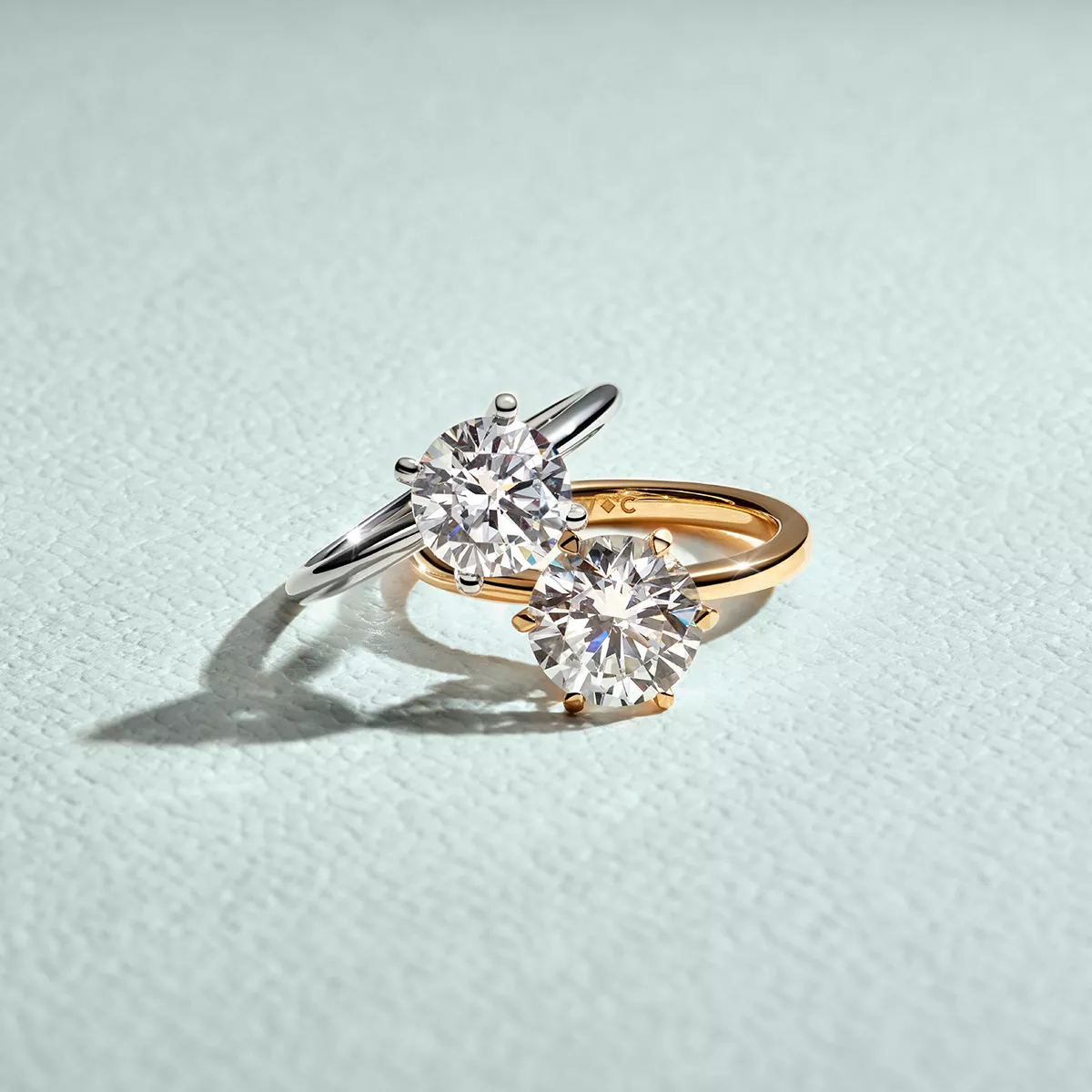
- Solitaire: Places the focus on one center diamond with a clean, uncluttered band.
- Halo: Surrounds the central diamond with smaller diamonds, making the center diamond appear larger while adding additional brilliance.
- Hidden Halo: Keeps the classic solitaire appearance from above while placing smaller diamonds beneath the center diamond for added brilliance from different angles.
- Bezel: Surrounds the diamond’s edge with metal, creating a smooth profile and additional protection around the diamond.
When comparing lab-grown diamond rings, consider the setting alongside the diamond rather than treating them as separate decisions. The proportions of the band, height of the setting, and relationship between the center diamond and surrounding details all contribute to the final appearance.
Don’t Overlook Everyday Wear
Remember, you’re going to have to live in this ring.
It can be gorgeous in a product photo and still not be the ring you want to wear every day. Before you fall in love with a particular setting, think about how it will fit into your actual life. Before choosing among lab-created diamond rings, consider:
- How high the center diamond sits above the finger
- Whether the setting may catch on clothing
- How the ring feels during everyday activities
- Whether the design will pair with a wedding band
- Whether the band width feels proportionate to the center diamond
A design that looks appealing in a photograph may feel different when worn, so proportions and comfort deserve attention alongside the diamond’s grading information.
What to Prioritize
If you’re comparing several diamonds with similar carat weights and prices, a useful approach is to work through the fundamentals in order:
- Check the certification to understand the diamond’s documented characteristics.
- Look closely at the cut and overall light performance.
- Choose a color grade that looks right with your selected metal.
- Focus on eye-clean clarity rather than automatically paying for the highest grade.
- Compare shapes and proportions based on the look you want.
- Choose a setting that enhances the diamond and fits your lifestyle.
In other words, don’t get so caught up in the numbers that you forget what you’re going to see on your hand every single day.
What I’d Look For Before Buying
Choosing among lab-made diamond rings is easier when you know what to evaluate. Understanding how lab-grown diamonds are created gives you useful context, while the 4Cs, certification, diamond shape, setting, and everyday wearability help you assess the finished ring.
If you’re shopping for a lab-grown diamond ring, start with the diamond itself, then look at how the shape, setting, metal, and proportions work together. For those exploring different lab-grown diamond rings, With Clarity offers certified diamonds and customizable ring designs, giving buyers the flexibility to compare diamond characteristics, settings, and proportions before choosing a design that suits their style.
You don’t have to choose the most expensive option or chase the highest grade in every category. You just want a diamond that looks beautiful to you, has the documentation to back up what you’re buying, and makes sense for how you’ll wear it.
This is a partner post.