There is a point in wedding planning when picking out the groom’s suit can suddenly become more complicated than it needs to be. You start with a general idea about color, but then somebody asks you about lapels, the season, the fabric, and soon you’re looking at six similar shades of blue and wondering how one looks more seasonal than another.
Most grooms do not need that much fuss. The most important part of picking the attire is to make sure the wedding suits fit properly, feel comfortable for a long day, and complement the wedding (in color and style). Consider the season and location, too, as a groom getting married in a city hotel in December is choosing for a very different day from someone having an afternoon ceremony outdoors in June, even if both of them originally saved the same suit photo.
In this post, we’ll cover some helpful tips on making sure you get the groom’s suit right with the fit, fabric, color, and dress code.
Start with the fit
Color gets attention because it is easy to talk about, but fit is usually what makes the difference once the suit is actually on. When trying different wedding suits, do not spend the whole fitting standing straight in front of the mirror. Make sure you move around a bit: sit down, walk around, button the jacket, move your arms, and stand tall in it. If something is already annoying you with the fit, it is likely to become more uncomfortable six hours into the wedding.
The most important part to check: the shoulders. The fit in the shoulders isn’t something a tailor can casually fit later. Be cautious about sleeve length, trouser length, and be sure the jacket sits properly across the back and shoulders. These are the points most grooms miss.
Of course, a few alterations are typically necessary and make every wedding suit looks better.
The dress code is there to help
Consider the dress code of the wedding when deciding what attire to wear. Black tie is fairly straightforward, but wording of a “formal” wedding is less obvious and gives you a little more leeway. Cocktail is less formal, and then there’s casual.
If the day is on the more traditional side, it is worth checking the basics of formal attire for men before going shopping. Not because the groom has to follow every rule, but because it is easier to make something your own once you know roughly what the setting calls for.
A formal evening wedding will usually carry a darker suit more easily. A daytime ceremony, especially outdoors, gives you more room for softer colors and lighter cloth. The groom can also be slightly more dressed up than the rest of the wedding party without turning it into a uniform situation. A waistcoat, a different tie or even a slightly deeper shade is usually enough.
Fabric is the thing you will notice later
Nobody gets excited about suit fabric in quite the same way they get excited about color, but fabric tends to become much more interesting once the wedding has been going for a few hours. A heavy suit in cold weather can feel great, but if you put the same thing on in strong summer heat and you may spend most of the day wishing you had chosen differently.
Linen makes sense for warmer weddings and relaxed settings, but it will crease. That is not a flaw so much as part of what linen does. If you like everything looking sharp and pressed for the entire day, it may not be the fabric for you.
This is also one of those decisions where the venue helps. A garden, terrace or coastal setting usually gives you more freedom to loosen things up. A formal ballroom at night tends to pull the other way.
You do not have to match every wedding color
Trying to match the entire wedding palette through the groom’s outfit is where things can start looking overworked. If the bridesmaids are wearing sage green, the groom does not necessarily need a sage tie, sage pocket square, sage socks and a boutonniere built around the same shade. One small connection can work its magic.
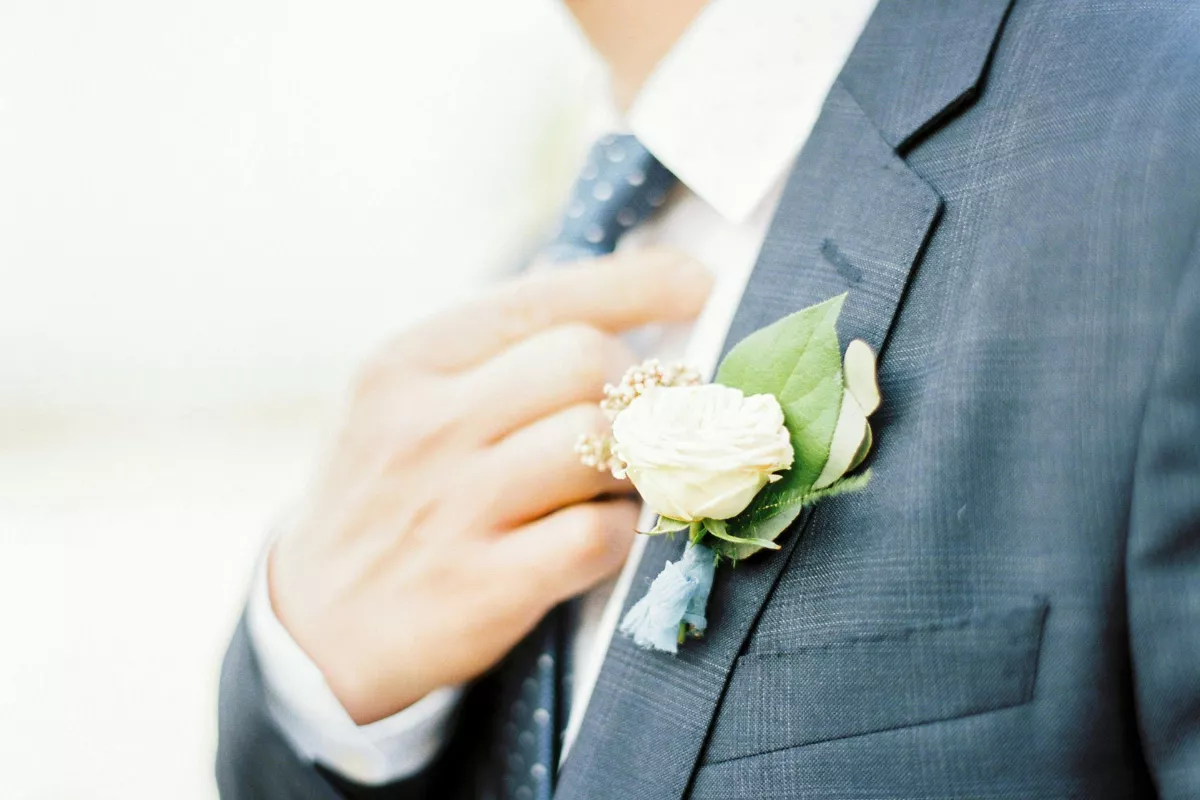
Navy remains popular because it is easy to work with and does not demand much explanation. Grey is also an easy pairing color, particularly for daytime weddings. Black is naturally more formal. Lighter blue, brown, beige and muted green can work very well too, especially when the rest of the wedding is less traditional.
The suit should sit comfortably beside the flowers, venue and wedding party rather than trying to repeat all of them. Matching outfits does not need to mean copying, and often the wedding party looks better when everyone is working from the same general idea rather than wearing identical pieces.
For more tips, see our guide on how to dress your groomsmen.
Leave the accessories until the suit is sorted
Shoes, ties, pocket squares and cufflinks are the easier part once the main decisions are made. Black shoes work naturally with more formal tailoring. Brown is an easy choice with navy, blue and plenty of lighter suits.
A patterned tie does not need a patterned pocket square fighting beside it. If the suit already has a strong color or texture, simple accessories usually do enough. And something the groom already owns, such as a watch or cufflinks with some history behind them, often looks better than another item bought just because it appeared on a wedding checklist.
The groom should feel like himself
This is the bit worth remembering after an evening of looking through wedding photos online. If the groom hates very slim trousers, he is not going to enjoy them more because there is a photographer nearby. If he normally stays away from bright colors, his wedding does not have to be the day he suddenly wears one from head to toe.
Choose a style that works for him, fits well, and complements his style. Once the fit is sorted, the fabric works for the weather and the dress code makes sense for the venue, you’re pretty much clear sailing. The groom has to wear the suit through the ceremony, dinner, photographs, conversations and whatever happens once the music starts. If a few hours in, he has mostly forgotten about what he is wearing, that is probably a very good sign.
This is a partner post.