We’ve updated our wedding blog submission guidelines to reflect that Love My Dress does not wish to publish AI-generated imagery and will not knowingly feature it. This covers weddings, bridal fashion campaigns, editorials and photoshoots, including work presented as concept or creative projects.
Post-production has always been part of photography, and we understand that AI now assists with elements of that process. Adjustments to light, colour and exposure, the removal of minor distractions, the refinement of what was genuinely in front of the lens, this is not what we are referring to.
What we do not accept is imagery that depicts something that never existed. What matters to us is that the final image reflects something true: a real moment, a real person, a real garment, a real setting. How that image is created is down to the judgement of those involved in making it.
Our readers come to Love My Dress trusting that what they see happened and that it reflects something real. That trust is the foundation of everything we publish. We know this will get harder as the technology develops, but this is where we stand.
If you’re unsure whether your submission meets these guidelines, please get in touch before submitting.
Am I Worrying Over Nothing?
Over the weekend, I stumbled upon an account on Instagram by an undeniably talented AI creator. Their AI generated imagery was so hyper realistic, I genuinely couldn’t tell the difference. Skin pores and imperfections, fine, floating hairs, perfect reflections. The grid featured high-end AI brand campaigns and the creator’s own concept-led campaigns – the kind of work you’d expect from a full creative team.
And whilst there were no images depicting concept-led weddings, I did see bridal editorial – 100% AI rendered, completely convincing and entirely unreal.
The creator said “Brands are looking to hire AI creators for editorial realism. These opportunities are waiting.” And underneath were hundreds of comments from people wanting to pivot, learn and offer this as a service. The whole vibe that flowed from the account held a sense of urgency, that if you don’t get on board now, you’ll be left behind.
“If you don’t get on board now, you’ll be left behind”
Quoted by many posts shared by wedding professionals that I’ve saved on Instagram
And maybe because I lingered a little too long on that particular account, the algorithm decided I wanted more AI related content, because over the rest of the weekend, I was presented with a lot of it.
Some examples:
- A wedding photographer who discovered a planner had taken one of their images, manipulated it using AI and used it in their own portfolio.
- An Event Designer telling her followers to “stop designing the old way”, “stop waiting 3 days for a 3D artist to get back to you”, “if your work looks the same every year, you are not evolving” and “AI is the ultimate booster for wedding designers”.
- Another said “Most wedding designers will disappear in the next 5 years…. designers who use AI will replace those who don’t” – with a heavy emphasis on how couples shouldn’t have to wait days for the creative process to unfold.
- A professional photographer expressing concern about how unregulated this space currently is, and how AI is now doing the culling and editing, a stage that has always been central to how photographers learn to see, refine their judgement and develop their craft, and one that can now be largely bypassed, with the fear that in just 2 years time, it will be couples who begin to notice something is wrong and who ultimately pay the price.
I understand how compelling it can be to experiment with new technology and creative tools. I also understand the financial pressure brands are under right now, with rising material costs, tariffs and wider geopolitical instability. I try to imagine being in their shoes, weighing up where to reduce costs and where to hold the line.
I try to imagine being a busy and overwhelmed professional photographer who is told they can save 14+ hours per wedding handing over culling and editing to AI. Or a planner who is worrying about bookings because enquiries are down (widely, in general, across the board this year).
Of course people are going to want and need to explore options.
And then I came across a wedding photograph that a professional had turned into a short video using Meta AI and whilst it looked beautiful, I felt nothing but resistance.
Seeing these examples of AI filtering into our world of weddings has left me feeling like we’re sleepwalking into a much larger issue that we haven’t properly stopped to question, where the line between what actually happened and what simply looks pretty and convincing becomes harder and harder to see.
I don’t want our wedding industry to become a place where I can no longer tell what was made by a human and what wasn’t.
The Human Cost
How each of us chooses to use AI is a personal decision, and I’m not here to tell anyone how they should work. But I do think it’s important to question the direction we’re being pulled in.
We’re being encouraged constantly to move faster, be more efficient and produce work that is more polished, more ‘perfect’ and more immediate.
And I’m not sure that’s where the most meaningful work comes from in a space built on creativity and real human experience. So much of what gives the work its depth and its authenticity comes from the slower process, the time spent learning, refining, making decisions, developing an eye, and allowing something to take shape through human judgement rather than being generated instantly.
This more heart-led and human approach keeps us connected to what we’re creating, to our authenticity, to the choices we’re making and to the people we’re creating it for, so that what we produce still carries something of us within it, rather than becoming something we feel disconnected from.
That’s the part I fear us losing.
And don’t forget…
There’s a broader issue that sits beneath all of this that bothers me greatly – one that is often acknowledged but rarely examined.
AI systems are trained on vast quantities of existing creative work, gathered from across the internet without consent, much of it produced by individuals like you and small businesses who have built their livelihoods on their skill, their eye, their originality and their unique and authentic creative output.
The outputs we are now seeing don’t emerge in isolation, they are the result of that collective body of work being absorbed, processed and reconfigured. That reality doesn’t disappear simply because the results are impressive, quick, easy, or because they save us time or provide a big dopamine hit. It’s a reality I haven’t been able to ignore.
None of this is about assigning blame to individuals who are experimenting or trying to understand where they fit within this shift. The momentum behind AI is real, and the pressure to engage with it is pervasive. What concerns me is the speed at which acceptance can and is taking hold without any corresponding depth of reflection. I see it seeping into our wedding feeds. When something becomes normalised before it has been properly examined, it becomes much harder to question later. By then, the horse has bolted, so to speak.
Transparency
I use Claude, a product built by one of those same large AI companies I refer to in the previous slide. I’m not blind to what that means. The distinction I draw for myself is between using AI to streamline and organise the administrative side of my business and not using it to generate or replace the creative and human work that this industry is built on – work that is felt, lived and experienced by real people and that inspires others.
I’m not claiming that distinction is perfect or that it absolves me of anything, but I’d rather be honest about this and the tension it brings, than pretend it isn’t there.
I don’t think using AI for one thing obligates me to accept it for everything.
I don’t share any of this from a position of purity, self-righteousness or technological suspicion. I’m writing it because what I’m starting to see happening in our industry specifically is different and raises some serious ethical questions.
A Need For Pause
It feels to me as though we’re at a point that warrants a more considered pause. Not a rejection of AI technology, but a clearer articulation of where and how AI belongs in the wedding industry and where it doesn’t.
Not every capability needs to be adopted simply because it exists. In a space that is fundamentally about real human experience, it seems worth asking what we want to preserve, what we are willing to change, and what, if lost, cannot be meaningfully replaced?
I don’t have all the answers, and I’m not interested in drawing hard lines for anyone beyond my work and personal decisions. But I do think this is a moment that asks something of all of us, not just as business owners or creatives, but as consumers and couples planning weddings too. We are all collective participants in shaping the culture of this industry.
What we accept now is what this industry becomes.
Weddings are not a product category. They are unrepeatable human experiences, documented for people who will look back at them for the rest of their lives. That’s why what we do here, and how we represent it, carries a different kind of responsibility.
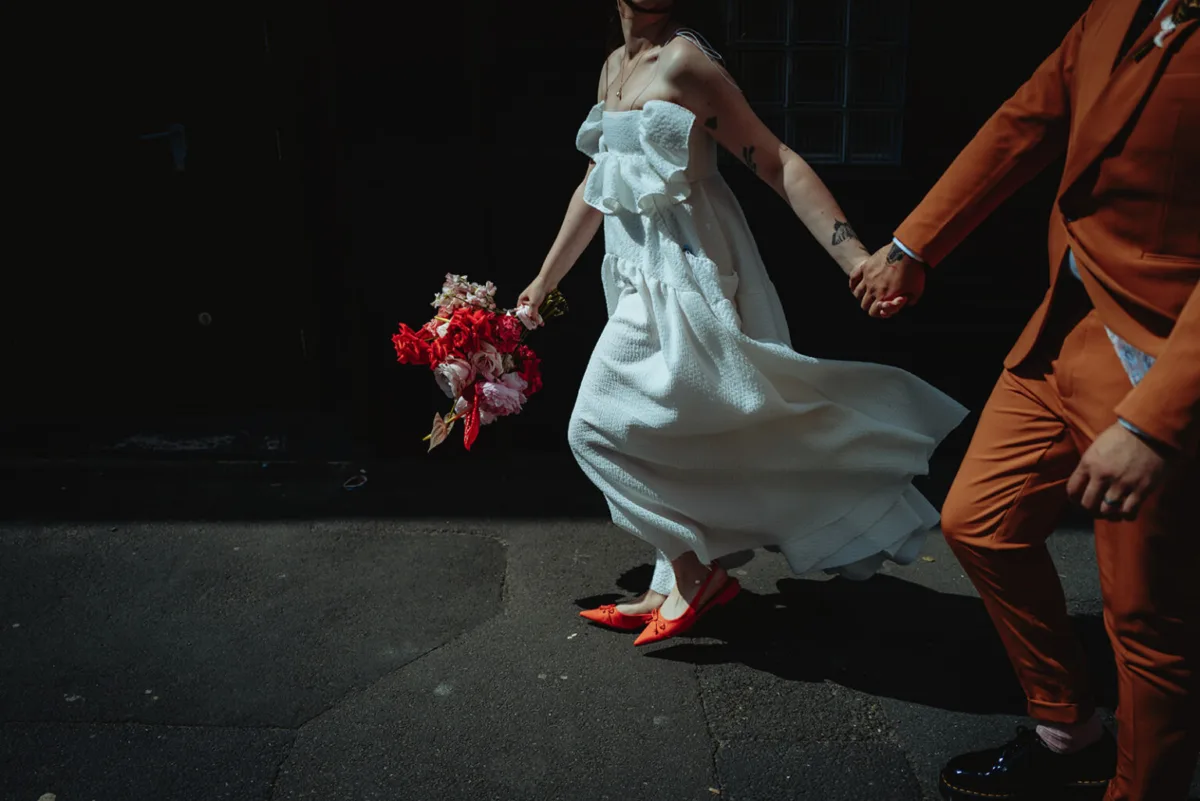
Some big questions about AI and Weddings that keep me up at night
- If a makeup artist spends years learning to read a face, a florist to read a season, a stationer to translate a couple’s vision into beautiful, tangible paper and print, then what do we lose when a convincing image of their work is treated as an adequate substitute for the work itself?
- How do we place value on skill, craft and experience when the outcome can be generated without any of the human input that once defined it?
- What does it mean to be inspired by imagery that depicts a reality that never existed?
- Why is there even a debate about whether couples should be told about the use of AI, particularly when it comes to wedding planning and styling proposals?
- If couples can’t tell what’s real, how do they know what to expect, ask for, or trust?
- What does it mean for a photographer who has spent years developing a creative voice to compete with tools trained, without consent, partly on their own work?
- What happens to the value of the people behind the work, when the image no longer requires any human process to create it?
- What does inspiration mean when it is not connected to something that was ever lived or made?
- Who benefits financially from this shift, and who loses out?
- Are we comfortable with a future where popular wedding campaign imagery has never involved anything real at all?
- Are we choosing this, or are we being carried along by it?
- If new photographers never have to develop their eye through the slow process of culling and editing their own work, what happens to the depth of craft and artistic judgement that can only come from doing it the hard way?
- When AI makes it easy to slim, smooth and reshape a person’s body, at what point does retouching stop being refinement and start being manipulation?
- Is editorial realism more exciting to us than human artistry and craftsmanship?
At what point do we stop recognising the hands and human artistry behind the work and only respond to the image in front of us?
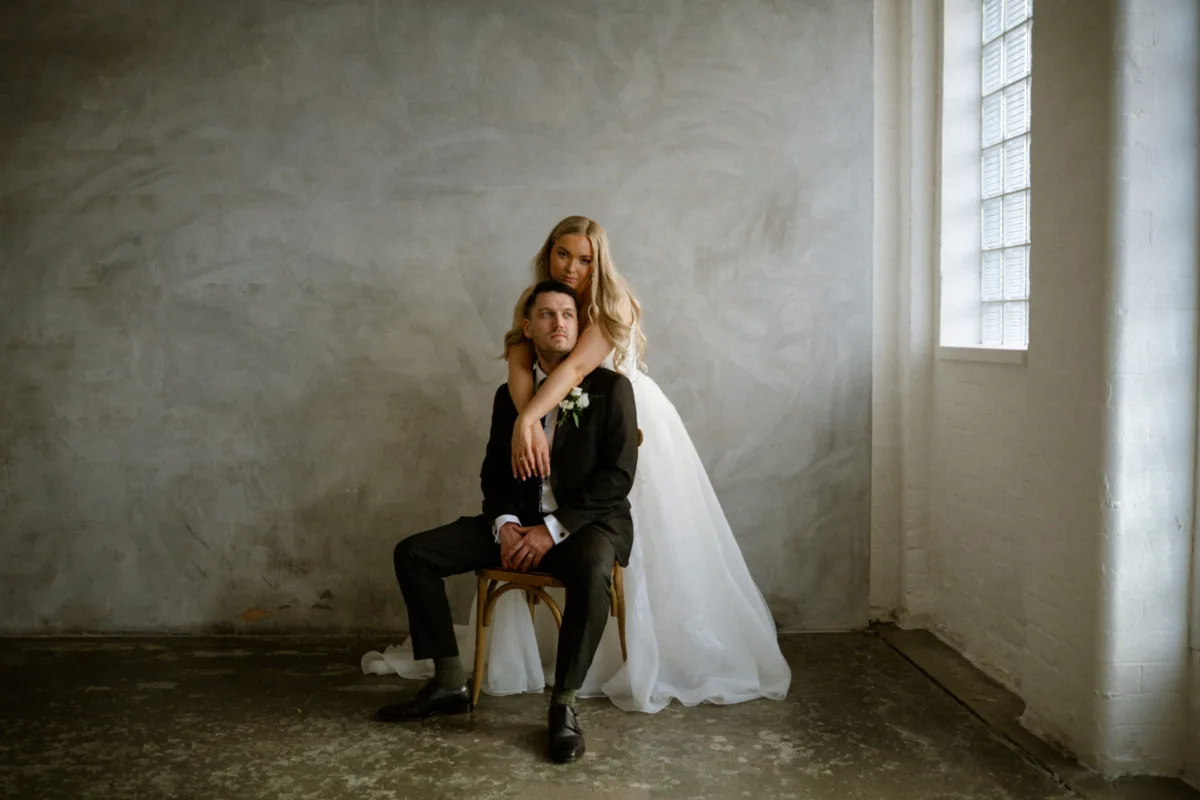
Where I Stand
I’m sharing this now because I don’t think we can afford to be passive about it. I think it matters and I think these changes are happening at a frightening speed and I don’t want to look back and realise I saw it coming and said nothing.
So this is me, saying it now.
Love My Dress has been part of this industry for nearly seventeen years. I have built something on the belief that real weddings, real people and real creativity are vital, to be celebrated and protected. That belief will never change.
As I was grabbing some last minute Easter eggs at the weekend, it occurred to me that I want to be very open in declaring Love My Dress an ‘AI-free zone’. I want the creative individuals grappling with this issue and fearful for the impact on their livelihoods and artistry, to know that I have their back. For me, that means we will not be publishing any AI-generated imagery.
I return to my earlier question; how will I know if it’s real or not? It’s not straightforward and I’m not sure it ever will be. The technology is already convincing enough to blur those lines and it will only become more so. This will rely on collective trust, honesty and a shared willingness to say what something is and how it was made and to refuse to blur that line for convenience. For me and Love My Dress, it will rely on trusting others to honour our values and integrity.
I’d love to know where you stand?
I’m not here to argue or create tension. I hope this gives you reason to think more deeply about something I believe genuinely matters.
This isn’t about rejecting technology, placing blame or telling anyone what to do. It’s about deciding what’s worth protecting.
Because if we don’t question this now, I fear that soon, it may be too late.


