Nobody warns you that the romantic part of getting engaged ends the second you open a diamond search filter.
One minute you’re picturing the proposal. Next, you’ve got a dozen tabs open, you’re squinting at clarity charts, and some stranger in a forum is swearing that lab-grown diamonds are either the smartest buy of the decade or a total scam, depending on which reply you scroll to. For most people, this is the first diamond they have ever shopped for. The industry doesn’t make it simple either. The advice out there tends to be either dense enough to put you to sleep or quietly nudging you toward spending more.
So let’s cut through it. Diamonds aren’t all that mysterious once you know what you’re looking at. There are really only a few things to grasp: what makes a stone sparkle, which quality differences your eye can even register, and where your money disappears for no good reason. Get those down, and everything after is just shopping.
1. Start With Your Priorities, Not a Price Tag
You’ve probably already bumped into the old rule. Spend two months’ salary. Three, if you ask the wrong person.
Here’s where that came from. A De Beers ad campaign. The company floated “one month’s salary” back in the 1930s, doubled it to two months in the U.S. in the 1980s, and pushed for three in a few markets. It was a number invented to sell diamonds, pinned to your income so it would climb as you earned more, and wrapped in just enough guilt to make you reach. And it stuck. People still quote it like it’s a law of physics.
It isn’t, and most couples have caught on. Average ring spending in the U.S. has dropped over the past few years, from somewhere near $6,000 in 2021 to about $5,200, even while the stones themselves got bigger. The takeaway: people are buying smarter, not just cheaper.
Before you look at a single stone, get clear on what you actually want here. A handful of honest questions does the job:
- Size or grade? You usually can’t max out both.
- How much does sparkle matter to you, really?
- Any shape already stuck in your head, or totally open?
- Do you care about resale, or is that never going to come up?
- Could going lab-grown stretch your budget into something better?
Answer those before you walk into a showroom or open a website, and you’ve already done the hard part.
2. Understand the 4 Cs, But Don’t Treat Them Equally
The 4 Cs of diamonds are sold to you as a neat little checklist of four equal things. Cut, color, clarity, carat. Tidy. Also misleading. They don’t matter equally, not even close, and the whole game is knowing which ones to spend on and which to quietly ignore.
Cut: Where the Sparkle Comes From
Cut first, because cut is everything, and people mix this up constantly. Cut is about how precisely the stone is proportioned and polished, and that’s what decides whether light bounces back at you or just sort of sits there looking flat. A great cut throws brilliance and fire. A bad one looks like glass, and no clarity grade or color grade on earth will save it. So if your budget has to flinch somewhere, don’t let it flinch here. A smaller stone with an Excellent or Ideal cut will out-sparkle a bigger, lazily cut one in plain daylight. Every time. No contest.
Color: Less Is Usually More
Color runs from D to Z, with D being pure colorless and Z carrying an obvious yellow or brown tint. Sounds like a big deal. In practice, the jumps between neighboring grades are so faint that even gemologists need them lined up side by side under special lighting to call it.
So no, you don’t need a D. Almost nobody can tell. Stones in the G to I range read as white to the naked eye once they’re set, and they cost a good bit less. Drop a little further, to a J or K, and set it in yellow or rose gold, and something funny happens. The warm metal makes the diamond look whiter. Costs less, looks great. The money you’d spend climbing up to D or E mostly buys you a nicer-looking certificate.
Clarity: “Eye-Clean” Is the Bar That Matters
Clarity is about the little internal flecks, called inclusions, plus any surface marks. The scale goes Flawless, then VVS, VS, SI, and down into Included. Flawless diamonds are real. They’re also absurdly rare, absurdly expensive, and here’s the kicker. To your naked eye, a Flawless stone and an SI1 look the same.
The word to keep in your head is “eye-clean.” It just means you can’t spot any inclusions at a normal viewing distance, and that’s the only standard a ring needs to meet. VS2 and SI1 land there reliably for most shapes. Plenty of SI2 stones do too, but you have to eyeball those one by one rather than trust the grade. Paying for VVS or Flawless gets you a prettier report. Your finger won’t know the difference.
Carat: Bigger Isn’t the Same as Better
Carat is weight, not size, and that trips people up. Two one-carat stones can look totally different on a hand depending on the cut. A well-cut one spreads out and faces up large. A poorly cut, deep one hides half its weight underneath, where nobody will ever see it.
Quick insider move. Prices spike at the round numbers, the so-called magic weights, at 0.50, 0.75, 1.00, 1.50, and 2.00 carats. Why? Because those are the numbers everyone types into the search bar. A 0.90-carat stone can cost noticeably less than a flat 1.00, and on a finger, you won’t be able to tell them apart. Shopping just under the line is about as close to a cheat code as this whole process gets.
3. Choose a Shape That Fits the Person
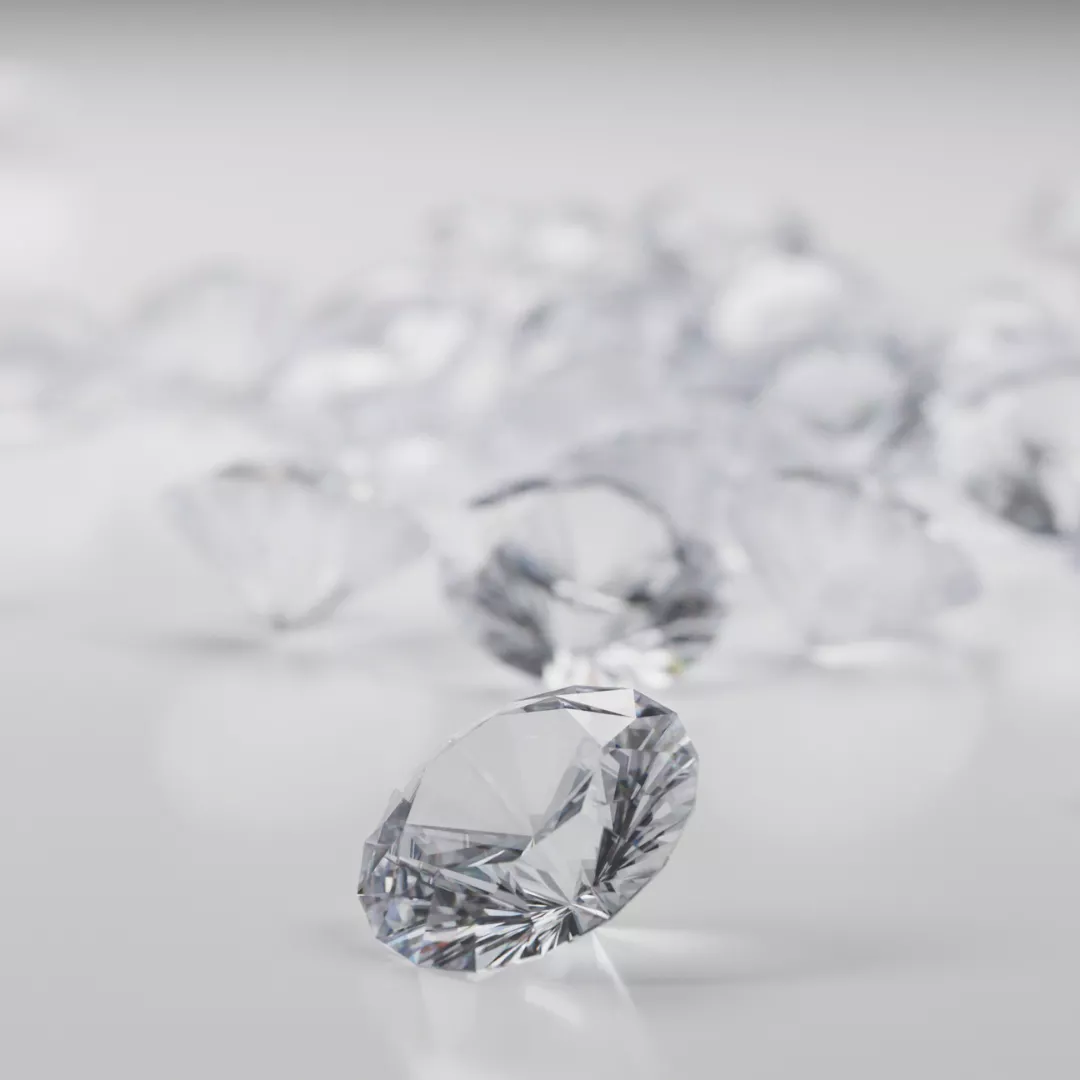
Shape is the most personal call. It’s also the one people botch most, usually by chasing what’s trending instead of noticing what the person actually likes to wear.
Round brilliants are still the most popular, and they’re the yardstick every other shape gets measured against. The faceting is built to fire off as much light as possible as they slot into almost any setting, and they hold resale value better than the rest. But round isn’t the runaway favorite it used to be. Lately, the numbers have been round and oval just about tied, around a quarter of couples each, and elongated shapes as a group are really the story right now.
Round brilliant. The default, for good reason. Maximum sparkle, goes with anything, easiest to resell. Classic without being boring.
Oval. Looks bigger than its weight suggests. That stretched outline lengthens the finger and reads larger than a round of the same carat, which is exactly why it’s having such a moment. Worth knowing: natural ovals have crept up in price on the back of all that demand.
Cushion. Soft, rounded corners and big, broad flashes of light instead of tight pinpoints. Some people love that pillowy look. Others find it a touch soft. Gorgeous in anything vintage-flavored.
Emerald. A step cut, which means long flashes like a hall of mirrors rather than glittery sparkle. There’s nowhere to hide a flaw in one, so you’ll want a cleaner stone, but the payoff is a kind of architectural cool no other cut pulls off.
Pear. One pointed end, one round end, and divisive in the best way. Stretches the finger, wears big, looks fantastic on its own with a plain band. Check the symmetry, though. A crooked pear jumps right out at you.
Princess. Square, sharp, modern. Its one weak spot is those pointed corners, which chip if they aren’t tucked behind protective prongs.
The easiest shortcut of all is to peek at the jewelry they already own. Their everyday pieces will tell you more than any trend roundup ever could. You should choose a unique engagement ring style according to their taste.
4. Natural vs. Lab-Grown: What Couples Actually Need to Know
First thing, and it matters. Lab-grown diamonds are real diamonds. This isn’t some technicality. Same carbon, same crystal structure, same hardness, same fire as a mined one. Put them next to each other, and a jeweler can’t tell which is which without lab equipment.
What’s different is the origin story. Natural diamonds formed over literally billions of years, more than a hundred miles down in the earth’s mantle, under heat and pressure that’s hard to even picture, then caught a ride to the surface on ancient volcanic eruptions. Lab-grown ones get made in a few weeks using one of two methods, either HPHT or CVD. Different process, same stone, right down to the atoms.
Then there’s price, and this is where it gets interesting. A few years back, lab-grown ran maybe 30 to 50 percent cheaper than natural. That gap has blown wide open. These days, you’re often looking at 70 to 90 percent less, and one widely cited 2026 study pegged the average at around 73 percent cheaper. In real terms, that’s a one-carat budget suddenly buying you two carats, or bumping you from a decent stone up to a stunning one for the same spend.
No surprise, then, that the market flipped. Lab-grown diamonds went from novelty to the thing most people actually buy. Depending on whose survey you read, they now make up somewhere between half and three-fifths of engagement ring center stones in the U.S. The whole industry has basically split into two. Lab-grown is now the affordable everyday luxury, and natural diamonds are leaning harder into rarity and where they came from.
Resale is the one place the two truly part ways. Natural diamonds have a real secondary market and tend to claw back a decent slice of their value. Lab-grown? Not so much, because supply keeps growing and prices keep falling, so they don’t recover much if you sell. One fair warning that applies to almost any diamond, though: most of them shed a big chunk of their retail price the moment you leave the store, natural included. If resale is on your mind even a little, it’s worth reading up on the differences in resale value between lab-grown and natural diamonds before you commit to either.
There’s no wrong answer. Want the most visible diamond your budget allows? Lab-grown. Care more about rarity, history, or holding value? Natural. The only way to mess this up is to pick blind.
5. Never Buy a Diamond Without Certification
One rule with no exceptions. Don’t buy an uncertified diamond. Ever.
A grading report is the only neutral, third-party word on what you’re actually getting. The labs that matter are the Gemological Institute of America GIA and the International Gemological Institute IGI, and their reports lay out the cut, color, clarity, and carat with no stake in the sale. One side note: IGI grades the bulk of lab-grown stones, so that’s the name you’ll run into most often on lab reports.
No report means no real way to know if the quality matches the claim, or whether the price makes any sense at all. It also keeps a seller honest about grade and origin. When you can, match the certificate number to the tiny laser inscription on the diamond’s girdle, which proves the paper and the stone belong together. And certified diamonds are the only ones you can line up against each other fairly. That’s the whole point. You want to compare, not take somebody’s word for it.
6. Think About How the Ring Will Actually Be Worn
Here’s the bit almost everyone forgets, and the one that causes the most regret later. A ring isn’t a photo prop. It lives on a hand, all day, for years, through typing and dishwashing and gym sessions and wrangling toddlers, so how it’s built matters every bit as much as the rock sitting on top.
Those sky-high settings with skinny little prongs? Stunning in pictures, fragile in real life. For daily wear, you want something that protects the stone, like a bezel or a lower profile. Pointy shapes, your princesses and pears, need their tips and corners properly covered, or they will chip. And a heads-up: certain shape-and-setting combos won’t sit flat against a wedding band, so you’re either paying for a custom curved band or living with a gap that always looks a little off.
A quick word on settings, since they get treated as an afterthought. They shouldn’t be. The setting changes how the whole ring reads, how it catches light from the side, how big the stone looks, how the whole thing balances on a hand.
The usual options:
Solitaire. Just the stone, nothing fighting for attention. Easiest to resize, plays nicest with a wedding band, never goes out of style.
Halo. A little ring of small diamonds around the main one, which makes everything look bigger. Downside: more nooks to keep clean and more tiny stones that can loosen over time. They’ve cooled off lately, after years on top.
Pavé or channel. Sparkle running along the band without upstaging the center stone.
And metal is not just a color choice. Platinum is tough as nails and never needs re-coating, which is exactly what you want gripping your stone. White gold looks almost identical but needs a fresh rhodium dip every couple of years to stay bright white. Yellow and rose gold are riding a long wave of popularity right now, yellow especially, and they look beautiful with those slightly warmer, cheaper color grades we covered earlier.
7. Don’t Let Trends Make the Decision for You
Trends are real, and they move fast, which is the problem. Ovals went from nowhere to nearly tied with rounds in about five years, prices riding right along. Halos owned the market, then quietly slipped down the list. These waves decide what showrooms push and what fills your feed, and that’s exactly why they make a shaky reason to pick a forever ring.
The classics didn’t become classics by trending. Round brilliants have been the standard for over a hundred years. Emerald cuts have looked elegant the whole time. Solitaires just never get old. They last because they suit the actual person wearing them, not because some algorithm served them up this month. Fine, let a trend point you toward a shape you fall for. Just make sure you’re falling for it because of the person, not because it’s everywhere this season.
Don’t Forget
Everything gets easier the moment you stop hunting for the “best” diamond and start hunting for the right one. For one specific person, one specific budget, one specific set of priorities. Those aren’t the same goal. Only the second one is even possible.
So spend on cut. Treat color and clarity as places to ease off once you hit eye-clean. Let shape be a gut thing, not a spreadsheet thing. Never skip the certificate. And whatever you land on, lab or natural, bezel or cathedral, platinum or gold, the ring that ages well is the one you chose with your eyes open and nobody breathing down your neck.
Take your time. Learn what you’re looking at. Ask a jeweler the questions they should be glad to answer. And when in doubt, trust yourself over anyone whose paycheck rides on how much you spend.
This is a guest post.