Getting engaged is exciting in a way that is hard to describe until it happens. There are calls to family, photos, congratulations, and usually a few conversations that begin with, so, have you thought about the wedding yet.
At first, those conversations are fun.
You talk about places you like, what the day might feel like, who you want there, maybe even the food or the music.
Then someone sends you a venue quote.
That is often when the practical side of wedding planning steps in.
A wedding can be deeply personal, but the money attached to it is very real. Deposits have deadlines. Guest counts affect catering. The photographer you love may cost more than you expected. Even small choices can add up.
And all of this is happening while normal life keeps moving.
Rent is still due. Groceries still cost what they cost. The car may need new tires. A birthday comes up. Someone needs a flight home for the holidays. None of that pauses because there is a wedding on the calendar.
That is why the most useful wedding budget is not the one that creates the most impressive day. It is the one that fits into the life you are already living.
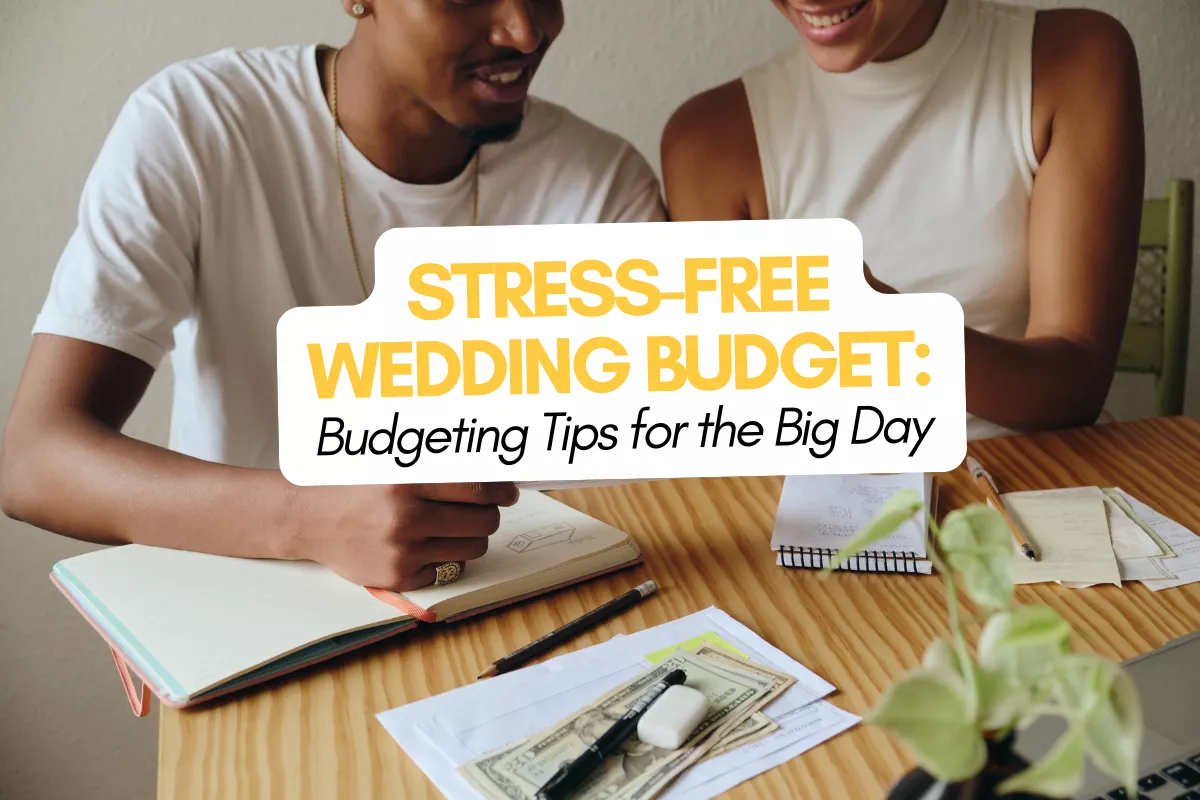
Look at Real Life Before Looking at Wedding Numbers
It is tempting to start with a number.
Maybe you have heard what friends spent. Maybe you searched average wedding costs and came away slightly horrified. Maybe a family member has already suggested what they think is reasonable.
But averages are not particularly helpful when it is your bank account paying the bills. A better place to begin is with an ordinary month. What comes in. What goes out. What you already save. What you owe. What tends to surprise you.
This can be a little uncomfortable, especially if you have not looked closely at your spending in a while. Still, it gives you something much more useful than a generic wedding estimate. It gives you a starting point that belongs to you.
Free budgeting apps can make that picture clearer, especially if your spending is spread across several accounts or cards. Sometimes simply seeing everything in one place answers questions you did not realize you had.
You might discover that you have more room than expected.
You might discover the opposite.
Both are useful.
The point is not to judge your spending. It is to find out what amount can realistically be redirected toward the wedding without making every other part of life feel tight.
Give the Wedding a Monthly Number
A total wedding budget can feel abstract.
Twenty thousand dollars is a number. Fifteen thousand dollars is a number. Neither tells you much about what happens next Tuesday when the electric bill and a vendor deposit are both due.
A monthly number is more concrete.
Maybe you can put away $300 a month without much strain. Maybe it is $800. Maybe your income changes from month to month and the amount needs to move with it. Whatever the number is, it should feel sustainable. That matters more than whether it sounds impressive.
There is a real difference between saying, we can technically afford this, and saying, we can pay for this and still feel okay afterward. The second version is probably the one worth aiming for. If you are saving for a year, that monthly amount gives you a rough idea of what you can build without leaning too heavily on credit or draining money meant for something else.
And yes, sometimes that means the original wedding idea has to change.
That is not necessarily a bad thing.
Spend More on What You Actually Care About
Most couples have a few things they care about much more than everything else.
It might be photography. It might be food. It might be having enough space for a large family. It might be music because you already know your friends are going to stay on the dance floor until someone turns the lights on.
Those are the things worth identifying early.
Otherwise, money tends to disappear into dozens of smaller choices that seemed important at the time. Custom menus. Upgraded chairs. Welcome bags. Extra signage. A second outfit. A decorative wall that photographs beautifully and is barely noticed in person. None of those things are wrong. They just may not matter equally to you.
One useful conversation is to ask each other what three things you would be genuinely disappointed to miss.
The answers might surprise you. One of you may care deeply about having a great meal. The other may be perfectly happy with simpler food but really wants a live band. Now you have something to work with.
A budget becomes easier when it reflects priorities rather than expectations.
Keep Wedding Money Somewhere Separate
Wedding spending gets confusing quickly when it is mixed in with everything else.
A separate account can help.
It does not have to be complicated. It just gives you a clear place for wedding savings and a clearer sense of what is available. There is also something calming about knowing that the money sitting there already has a job.
When the florist deposit comes due, you are not wondering whether paying it will interfere with groceries or next month’s insurance payment. You already know where that money is coming from.
If you are able to automate transfers, even better. Small transfers can feel almost invisible at first. After a few months, they start to look like progress. And wedding planning feels different when you can see progress.
Assume Something Will Cost More Than Expected
It probably will.
Maybe several things will.
Quotes change. Guest counts change. Tax and service fees appear. A dress needs alterations. The venue requires insurance. Someone mentions transportation and suddenly you realize nobody has planned how people are actually getting back to the hotel.
Wedding budgets rarely survive completely untouched. So build in some breathing room. Not because you are planning badly, but because there are a lot of moving parts.
Checking the budget regularly helps too. You do not need to sit down with a spreadsheet every night. That would probably make both of you miserable.
But checking in once or twice a month can prevent a small overage from turning into a much larger one. Sometimes the conversation is as simple as, we spent more here, so we need to spend less somewhere else.
That is budgeting in real life.
It is not perfectly neat.
Be Careful When Credit Starts Feeling Like Extra Money
Credit cards can be useful for wedding expenses, especially if you are earning rewards or want purchase protection.
The problem is not necessarily the card.
The problem is when the card starts making the budget feel bigger than it is.
A $2,000 upgrade still costs $2,000 even if you do not have to pay the whole balance today. That sounds obvious, but wedding planning creates a strange kind of momentum. Once you have already spent a large amount, another $300 can start to feel small. Then another $500. Then one more upgrade because, at this point, why not.
That is how the total creeps.
If you are using credit, it helps to know exactly how and when you plan to pay it off. The goal is to remember the wedding fondly, not to keep paying for it long after the photos arrive.
Leave Something for the Life That Comes Next
This is the part that gets forgotten. The wedding is one day. Marriage begins after it. There may be a honeymoon, a move, a new home, plans for children, debt you want to clear, or simply the desire to rebuild savings after months of spending.
Even if none of those things are immediate, it is worth protecting some money for the life on the other side of the wedding.
Imagine waking up a week after the celebration. The guests have gone home. The flowers are fading. The dress or suit is hanging somewhere. There are photos coming, thank you notes to write, and suddenly life is quiet again.
What would you like your finances to look like at that point?
That question is worth asking before the spending begins.
Let the Budget Be Part of the Marriage Conversation
Planning a wedding can reveal a lot about how two people think about money. One person may want to pay more for convenience. The other may question every extra charge. One may be comfortable using savings. The other may feel anxious watching the balance drop.
That can create tension, but it can also be useful. You are learning how to make financial decisions together. That skill will matter long after the seating chart is forgotten.
You will probably not agree on every purchase. You do not need to.
What matters more is being able to explain what matters to you, listen to what matters to the other person, and find a number you can both live with.
A wedding budget is not only about restricting spending. At its best, it is a way of deciding what you want this season of life to look like.
And maybe that is the real goal. Not creating the biggest day you can possibly afford. Creating a celebration that feels like yours, while still leaving room for everything that comes after it.
This is a guest post.