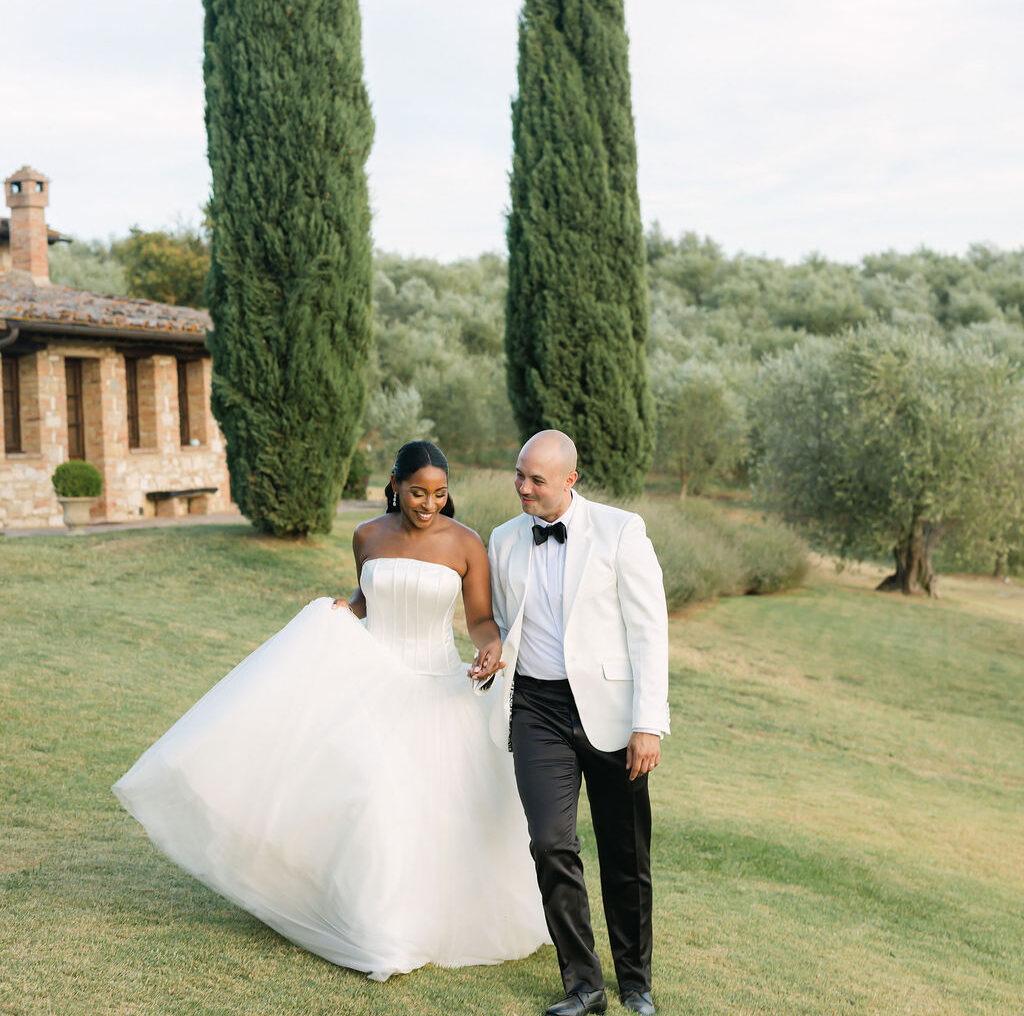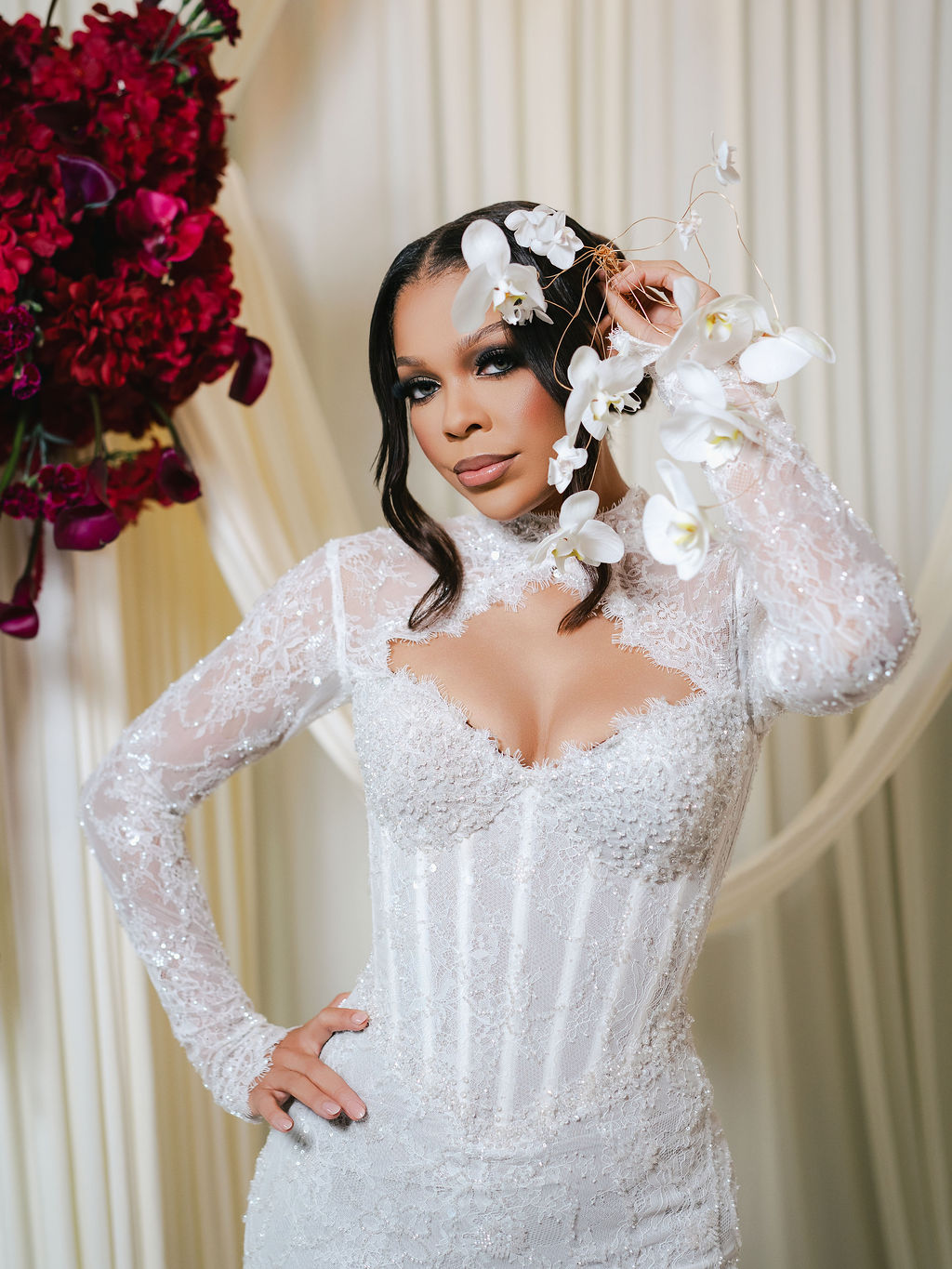
Every 20 years or so, there’s a shift: Suddenly, a new generation is getting married. And right now, Gen Z couples are starting to tie the knot. “Gen Z are the ones bringing bold ideas and zero patience for doing things ‘just because that’s how it’s always been done,’” says wedding planner José Rolón. “They care about meaning, vibes, and aesthetics. They’re super collaborative, very online, and not afraid to throw tradition out the window if it doesn’t fit who they are.” Compared to millennials, this generation is also more likely to pay for their own weddings, and therefore, they’re less concerned with what others want their big day to look like. “Working with Gen Z couples offers a fresh perspective,” says wedding photographer Alicia Rinka. “They prioritize authenticity, personalization, and meaningful experiences over traditional ones. Their planning often involves unconventional venues and a strong emphasis on sustainability and inclusivity.”
Gen Zers are going abroad for their weddings, bringing in THC-infused drinks rather than cocktails, wearing whatever they want, and putting sections of their budget toward new vendors, such as content creators. Many are having smaller weddings in order to have bigger honeymoons, or cutting back in some areas in an effort to save for a down payment on a house. “We’re seeing the early wave of Gen Z couples starting to plan and book, and it’s already influencing the industry in subtle but significant ways,” says Melissa Sullivan, a floral designer. While factors like inflation and tariffs are driving costs up for couples of all ages, Gen Z is spending differently. Even though the average cost of a wedding is hovering close to where it’s been in previous generations–around $40,000 to $60,000—the cost breakdown has changed dramatically.
“My advice to Gen Z couples planning their weddings right now is to start with a clear understanding of how much you’re willing and able to spend,” says Courtney Alev, a consumer financial advocate at Intuit Credit Karma. “When making financial decisions for your wedding, remember that the heart of the day is celebrating your love with the people who matter to you—and the dress, flowers, tablecloths, and centerpieces won’t be what you remember most.”
Here, the experts weigh in on how much Gen Z is spending, where they’re spending it, and who is footing the bill. Read on for more.
How Much Is Gen Z Spending on Their Weddings?
In May, BRIDES asked our Instagram followers an important question: If you’re a Gen Zer and planning a wedding, what is your big-day budget? Of the more than 2,000 brides and grooms who weighed in, the majority said they’re spending $50,000 or less on their big day. (Thirty-two percent are spending between $50,000 and $100,000, while 24 percent are spending more than $100,000.)
Location, guest count, and design choices often play an outsized role in determining the bottom line. For example, one couple noted that they're planning a $6,000 wedding for 75 guests in Scranton, Pennsylvania, but another was planning a 150-person wedding in Lake Tahoe, California, for $150,000. One couple is eloping in Iceland with 20 loved ones for $45,000; another is doing the same in San Diego for $10,000. However, while the overall numbers are similar to those of millennials, the money is allocated quite differently. “It’s not about spending more or less—it’s about spending differently,” Rolón says. “Gen Z will go all in on a custom suit, a killer content creator, or a sustainable experience, but they’ll skip favors or paper invites without blinking.”
Intuit Credit Karma, a financial services company, recently polled its customers about Gen Z weddings. “According to our recent data, Gen Z is more likely than millennials to overspend on their wedding, as almost a quarter said they spent far out of their means for their wedding, while only 15 percent of millennials could say the same,” Alev says. “With that said, it’s clear that today’s couples feel increasingly empowered to break from tradition and allocate their money exactly how they want.” Gen Z couples often direct their budget toward other nuptial-related events instead of the ceremony and reception. “I’m seeing Gen Z spend less overall on weddings compared to millennials,” Sullivan says. “Many would rather invest in an unforgettable honeymoon or post-wedding experience than allocate the majority of their budget to the wedding day. That said, they are getting creative with DIY touches like Polaroid cameras on reception tables and custom photo booths, and over-the-top after-parties are becoming more common.”
Klaus Vedfelt / Getty Images
Who Typically Pays for a Gen Z Wedding?
“More and more, [the couple] is paying, or at least they’re contributing a big chunk,” Rolón says. “Gen Z likes to do things on their own terms, and that includes the checkbook.” Rinka says it’s often a fifty-fifty split. “Based on my inquiries and what I’ve observed on TikTok, about half of Gen Z couples are contributing to their wedding expenses, while the other half are primarily supported by their parents for the full wedding weekend,” she says. We found similar results: Couples are contributing to their own weddings—or paying for them in full—now more than ever before. Of the 2,302 Gen Zers who weighed in on our poll, about a third are paying for their wedding entirely themselves. Twenty-seven percent said their families are paying for the festivities, and 40 percent are splitting the costs with their families.
And when the money is their own, it means doing things their way. “It’s definitely a new ballgame,” Sullivan says. “Gen Z couples are prioritizing spending based on what they care about, not what’s important to parents or guests. If florals are meaningful to them, that’s where the budget goes. If the entertainment or guest experience is the priority, that’s where they’ll splurge. It’s a much more intentional and value-driven approach.”
In response, vendors are adjusting how they charge. “Gen Z’s preference for transparency has influenced pricing strategies,” Rinka says. “They want clear, upfront information about costs and packages. Vendors are adapting by offering customizable options and detailed pricing to meet these expectations.” Sullivan is one of them: She’s adjusted her packages to include more à la carte options for couples to customize a design based on their priorities. “Flexibility and choice are key,” she says. “This generation wants to feel like they’re in control of where their money is going and what kind of day they’re creating.
Kelvin Murray / Getty Images
7 Factors Contributing to the Cost of Gen Z Weddings
There are two types of factors that affect the cost of weddings: Outside ones like inflation, and inside ones like the couple’s wedding-day priorities. Some bring costs up, and others bring them down, ultimately resulting in wedding budgets not too dissimilar from those of millennials. Here, we outline a few external and internal factors—and explain how they’re moving the needle with Gen Z weddings.
A High Cost of Living
Even if all other factors remain the same, each generation will likely see a slight increase in wedding costs simply due to inflation. “The rising cost of living has significantly impacted Americans’ monthly budgets in general, with 82 percent expressing concern about inflation and its effect on essentials like food, housing, and gasoline,” Alev says. “As many struggle to keep up with basic expenses, Gen Z couples planning weddings right now may feel an added financial strain and be forced to make sacrifices in their celebration plans.” Inflation has ultimately pushed this generation to be pickier. “External factors like inflation have raised the overall cost of weddings, including florals,” Sullivan says. “As a result, Gen Z couples are being more selective. They’re asking themselves, ‘What’s truly important to us?’ and allocating their budget accordingly, rather than feeling pressured to do it all.”
A Shift Away From Alcohol
“Gen Z is definitely drinking less,” Rolón says. “[We’ve seen] lots of mocktail menus, some dry weddings, and fun swaps like coffee carts or even cannabis lounges in legal states.” An alcohol-free bar package comes at a lower cost than one stocked with top-shelf liquor and signature drinks. Plus, with the rise in intimate and micro weddings, many Gen Z couples may be providing their own alcohol, rather than adding an expensive package to their catering tab.
An Appreciation for Photography and Social Media
One thing Gen Z is spending more on? Photography and content. “Photography has gained even more significance,” Rinka says. “Gen Z’s emphasis on authentic, candid moments aligns with their social media habits. They often seek photographers who can deliver both high-quality images and content to share on social media.” Sometimes, they’ll bring on a second vendor, a wedding content creator, to capture content exclusively for social. “These creators capture behind-the-scenes moments tailored for platforms like TikTok and Instagram, for immediate and shareable content,” Rinka adds. And it’s not just their own posting: Social media affects couples’ inspiration and what they spend right out of the gate. “Inflation [affects costs], sure. Tariffs, no surprise! But also social media,” Rolón says. “They’re inspired by what they see online, but they’re smart about prioritizing what actually matters to them.”
Design Preferences
“Designing for Gen Z couples often means starting with a clean slate,” Sullivan says. “They are redefining what a wedding ‘should’ look like, moving away from long-standing traditions. Think: no corsages, no boutonnieres, and in some cases, no bridal bouquets. I’ve had brides opt for bridal purses instead! Their focus is on what feels fun, personal, and memorable, not necessarily what’s expected. I truly believe this generation is setting the tone for new traditions to come.”
Unique Guest Experiences
In addition to honoring their love for each other, younger couples are often focused more on celebrating the communities and experiences that shaped them. Often, that means booking unique or new-to-the-scene vendors. “Gen Z is splurging on fashion, content, and guest experiences,” Rolón says. “They’re saving on formal dinners, favors, and anything that feels wasteful or too traditional. They’re hiring content creators for next-day reels, or bringing in tattoo artists or astrologers. [They’re sourcing] curated Etsy finds or commissioning cool, meaningful stuff.”
A Desire to Travel
“One trend we’ve observed among Gen Z couples is a preference for scaling down their weddings in order to splurge on a memorable honeymoon,” Alev says. “Among Gen Z and millennials who chose to do a small, intimate micro wedding, Gen Z was nearly 10 percent more likely than millennials to do so with the intention of affording a more luxurious honeymoon instead.” Others are going all-out on destination weddings, which have seen an upward trend since the end of the pandemic.
Smaller Guest Counts
“Smaller ceremonies with around 50 guests or less seem to be all the rage across both generations, as 67 percent of Gen Z and millennials say they have noticed a rise in micro weddings and have either attended one in the past year or plan to in the next,” Alev says. “Additionally, an almost equal amount of Gen Z (22 percent) and millennials (20 percent) are currently planning a micro wedding of their own.” It’s another way couples are doing things their own way: cutting down their parents’ must-invite list to prioritize only those closest to them. “This trend reflects a shift away from traditional wedding norms,” Alev says. “As we’ve seen in many areas, including the workplace, Gen Z continues to challenge long-standing conventions and carve out their own path.”